

Save Your Knees: 3 Knee-Friendly Exercises (No Squats Needed)
By the 1GlowWithin Team · Updated November 2026
This article shares general wellness information, not medical advice. If you have ongoing knee pain, a recent injury, or recent surgery, check with your doctor or physical therapist before starting a new routine. Some links are affiliate links, which means we may earn a small commission at no extra cost to you.
If squats hurt your knees, you're not alone — and you don't have to push through painful movements to build stronger, steadier legs. Start with movements you can do comfortably and at your own pace.
The three exercises below work your hips and legs and help you practice balance. They’re a simple starting point if you’re new to exercise, getting back into a routine, or looking for a short session you can do at home.
Why Squats Aren’t Always Knee-Friendly
How a squat feels can depend on how far you bend your knees, how much weight you’re carrying, and how your knees feel that day. If a deep bend brings on discomfort, try a smaller movement or choose an exercise you can do comfortably. The exercises below give you three ways to practice strength and balance without doing squats.
3 Knee-Friendly Exercises to Try
1. Glute Bridge

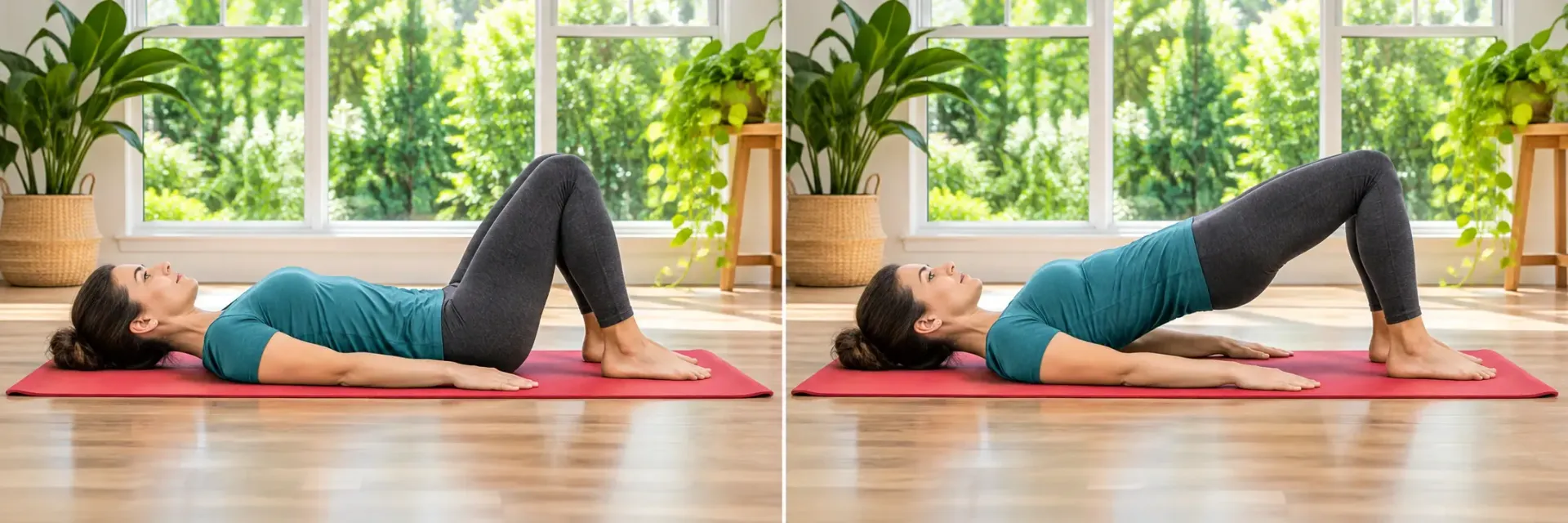
The glute bridge strengthens your glutes and hamstrings, which help support your lower body during everyday movement.
- Lie on your back with your knees bent and your feet flat on the floor, about hip-width apart.
- Press evenly through both feet and lift your hips as far as you comfortably can without arching your lower back.
- Gently squeeze your glutes and pause for 2–3 seconds.
- Lower your hips slowly.
Try 5 slow repetitions. Make the lift smaller if that feels more comfortable. As you get stronger, build toward 8–10 repetitions or try holding the lift for 5 seconds.
2. Supported Single-Leg Balance

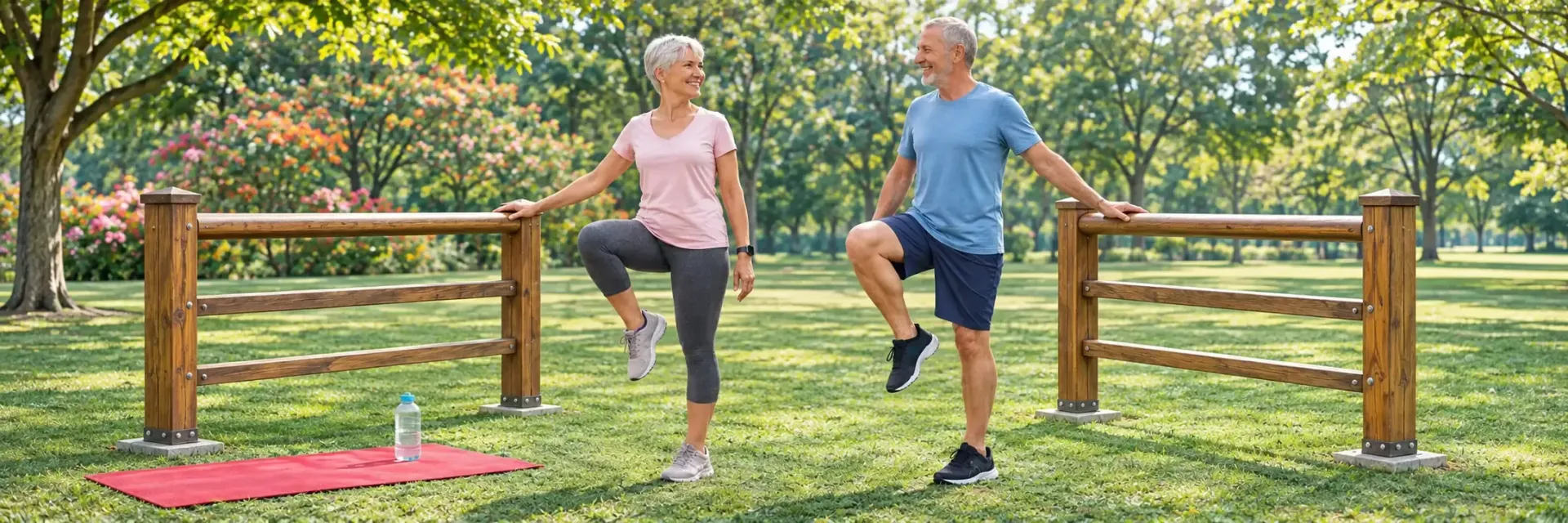
This exercise helps you practice shifting your weight and staying steady on one leg, while gently working the muscles at the front of your hip.
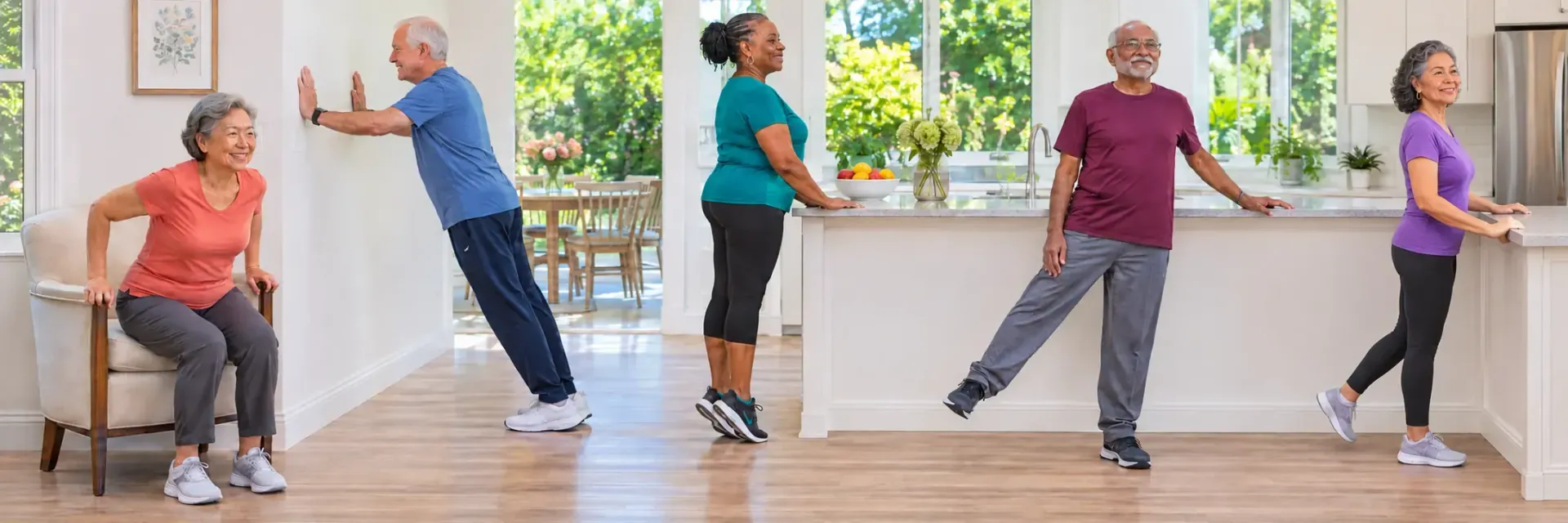
- Stand tall beside a sturdy counter, railing or chair, resting one hand on it for support.
- Shift your weight onto the leg closest to your support, keeping that knee slightly soft.
- Slowly lift your other knee in front of you — only as high as feels comfortable. Look ahead and breathe normally.
- Hold briefly, then lower your foot with control. Turn around and repeat on the other side.
Try holding for 5–10 seconds on each side. Start with a small lift, with your foot just off the floor. As your balance improves, lift your knee a little higher, toward hip height, or hold a little longer. Keep your hand on your support throughout.
3. Side Steps (Crab Walk) With an Optional Resistance Band

Side steps work the muscles on the outside of your hips and help you practice moving sideways with control.
- Stand on a flat surface with your feet about hip-width apart and your knees softly bent, as if you're about to sit back slightly.
- Take a small step to the right, then bring your left foot toward your right without crossing your feet.
- Keep your toes pointing forward and your steps slow. After a few steps, switch directions and lead with your left foot.
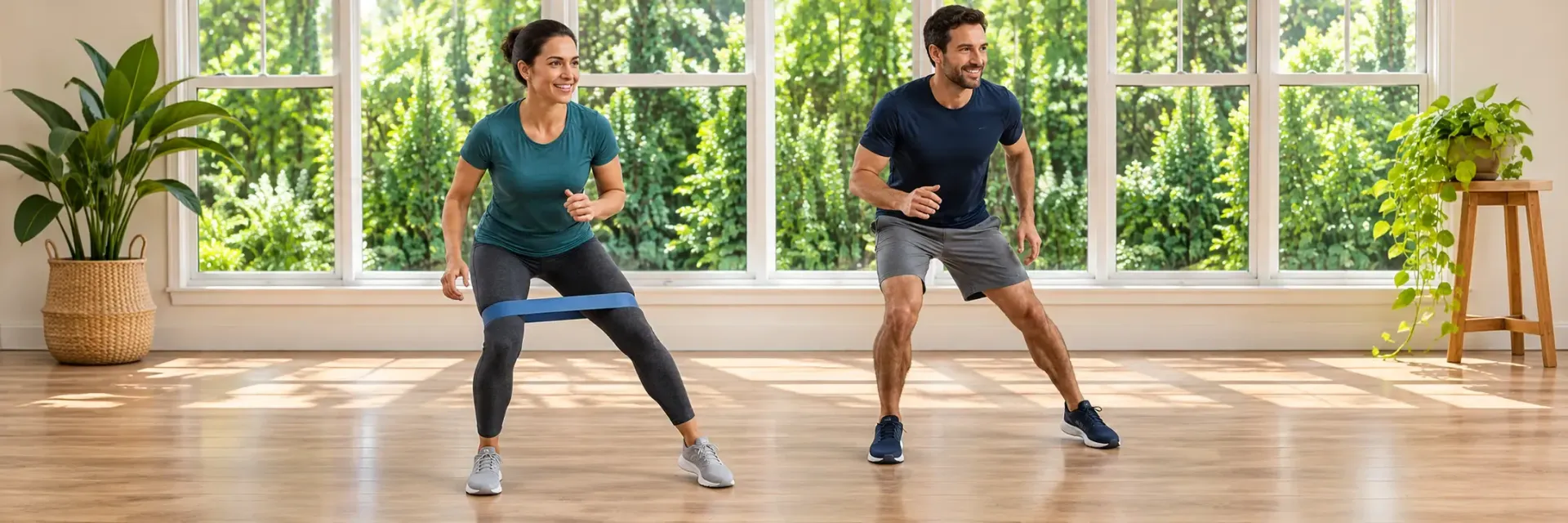
Try 3–5 steps in each direction without a band. Once that feels steady and comfortable, try a light resistance loop just above your knees, as shown on the left in the photo. Keep your steps small and leave enough space between your feet to maintain gentle tension on the band.
How Often Should You Do These Exercises?
Start with one round twice a week, with a rest day between sessions. Use a slow, controlled pace. As the exercises become more comfortable, add a few repetitions or hold your balance a little longer.
It’s normal to feel your muscles working. Stop if you feel sharp or worsening knee pain. If pain lingers or keeps returning, ask a healthcare professional for guidance. Seek urgent medical advice if your knee locks, gives way, becomes severely swollen, or you can’t put weight on it.
Support Your Knees Through Nutrition

Movement helps build strength, and a balanced diet supports your overall health. Colorful vegetables and fruits, whole grains, nuts, seeds, and fish are all options you can build into meals you already enjoy.
For more meal ideas, 👉explore Nourish Your Body or browse our guide to Red Superfoods.
Salmon and Quinoa Power Bowl
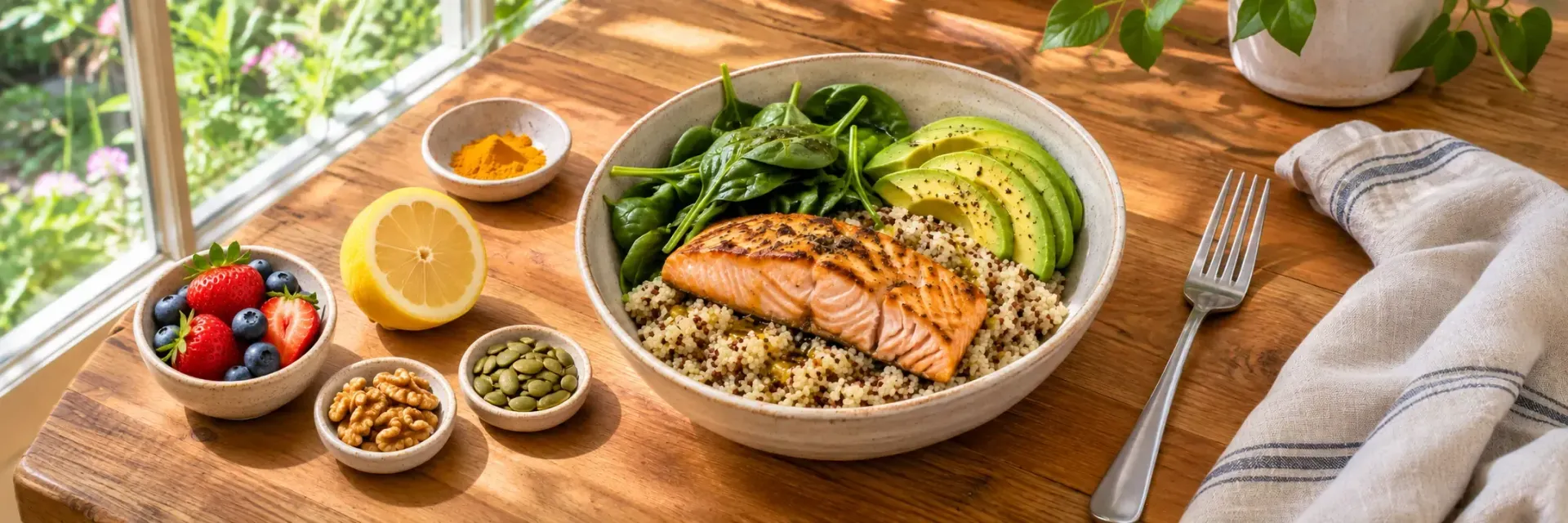
Start with cooked quinoa and add grilled salmon, spinach or kale, and sliced avocado. Finish with olive oil, lemon juice, and a little turmeric and black pepper if you like.
Glow tip
Use leftover quinoa and whichever greens you have on hand to pull the bowl together quickly.
What About Joint Supplements?

If you’re comparing supplements for joint comfort, start by looking at the ingredients. Some formulas contain several of the same ingredients, and the research varies by ingredient and by condition.
Joint Supplement Ingredients You May See
- Glucosamine and chondroitin have been studied for knee osteoarthritis, with inconsistent findings. 👉 See More
- MSM and hyaluronic acid are sometimes sold on their own or combined in joint formulas. Evidence for symptom relief is limited. 👉 See More for MSM · See More for Hyaluronic Acid
Other Supplements Often Used for Joint Support
- Omega-3 fish oil (EPA/DHA) provides two omega-3 fats also found in oily fish such as salmon and sardines. 👉 See More
- Turmeric or curcumin has been studied for knee osteoarthritis symptoms. More research is needed to draw firm conclusions. 👉 See More
- Collagen peptides come in powders and capsules. Research on their effects on joint comfort is still limited. 👉 See More
Before trying a supplement, ask your doctor or pharmacist, especially if you take prescription medication or are pregnant or breastfeeding. Glucosamine and chondroitin can increase bleeding risk in people who take warfarin. If you have a shellfish allergy, ask your pharmacist to check the product’s ingredients.
For a closer look at one joint supplement, read our Joint Genesis Review.
Everyday Habits for Comfortable Movement

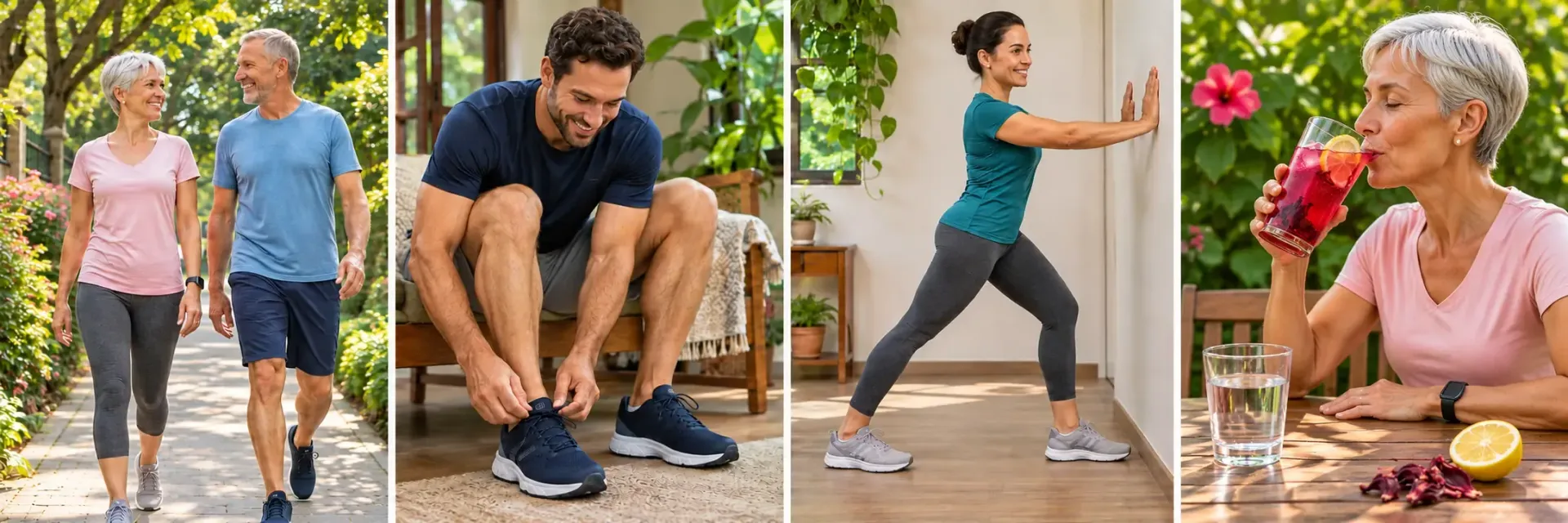
- Break up long periods of sitting by standing or taking a short walk when you can.
- Choose comfortable, supportive shoes for walking and exercise.
- If your hips or calves feel tight, try gentle stretches within a comfortable range.
- Keep water handy during the day and when you exercise.
Looking for a refreshing drink? Try our Hibiscus Rose Lemonade.
Start With What Feels Manageable
Try one exercise today and see how it feels. Once you’re comfortable with the movement, add another. A short routine you can return to is a good place to start.
Want a simple plan to follow at home? Read 5 Gentle Exercises for Adults Over 60 and download the free 4-Week Gentle Strength Plan, with weekly targets, an exercise reference chart, and a printable tracker.
Frequently Asked Questions
Can I do these exercises if I have chronic knee pain?
If you have ongoing pain, arthritis, or a recent knee injury, ask your doctor or physical therapist which movements are right for you and how much to do at first.
How often should I do these exercises?
Start with one round twice a week, with a rest day between sessions. Build up gradually as the movements feel comfortable.
Do I need equipment?
Use a sturdy counter, railing or chair for the balance exercise. A mat or carpeted floor makes the glute bridge more comfortable, and the resistance band for side steps is optional.