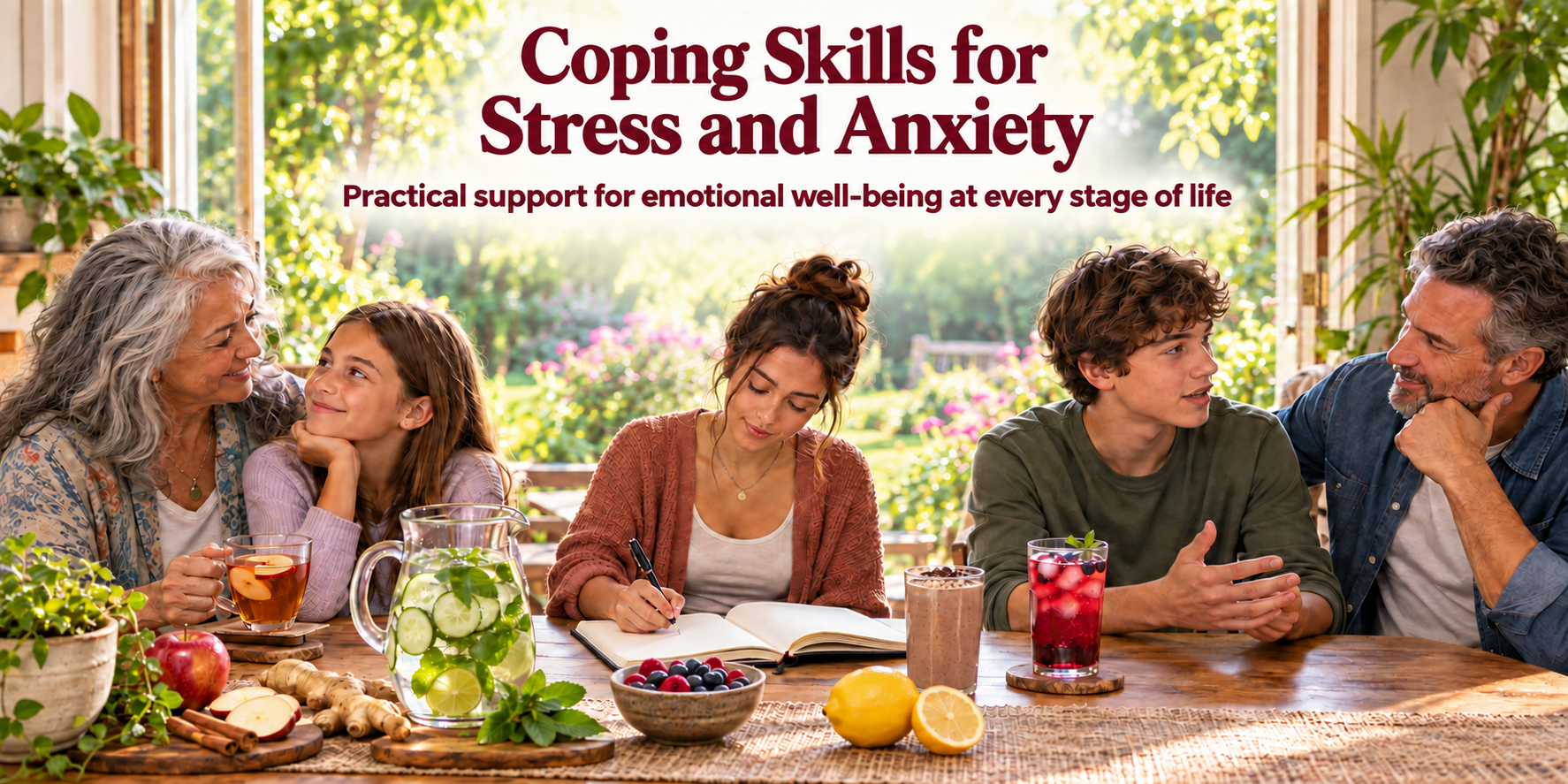
Stress and anxiety can affect anyone—children, teenagers, young adults, parents, caregivers and seniors—although what causes them and how they feel may differ from one person to another.
A student may feel overwhelmed by school and uncertainty about the future. A young adult may be managing work, relationships and financial pressure. Parents and caregivers may be carrying the needs of everyone around them, while older adults may face health concerns, changing responsibilities, grief or loneliness.
Some people talk with someone they trust. Others exercise, listen to music, spend time alone, pray, journal or try to distract themselves. These responses are examples of coping skills.
Healthy coping does not mean pretending that everything is fine. It means finding ways to move through difficult emotions without abandoning your mental, emotional or physical well-being.
Sometimes that support begins with one deep breath, a glass of water, a short walk, a needed
What Are Coping Skills?

Coping refers to the thoughts and behaviours we use to manage stressful situations, whether the stress comes from our thoughts and emotions or from outside circumstances.
In simpler terms, coping skills are the tools we reach for when something becomes difficult to handle emotionally, mentally or physically.
They may include:
• Deep breathing
• Journaling
• Exercising or stretching
• Listening to music
• Spending time outdoors
• Practising meditation or prayer
• Engaging in a hobby
• Talking with someone we trust
• Taking a break before responding
• Asking for professional support
Coping skills matter because stress can affect much more than our emotions. Ongoing stress can interfere with sleep, concentration, decision-making, appetite, energy, relationships and physical health.
Healthy coping strategies may not remove the source of the stress, but they can help us feel less overwhelmed and more capable of deciding what to do next.
Coping Skills and Emotional Intelligence

Coping refers to the thoughts and behaviours we use to manage stressful situations, whether the stress comes from our thoughts and emotions or from outside circumstances. In simpler terms, coping skills are the tools we reach for when something becomes difficult to handle emotionally, mentally or physically.
They may include:
- Deep breathing
- Journaling
- Exercising or stretching
- Listening to music
- Spending time outdoors
- Practising meditation or prayer
- Engaging in a hobby
- Talking with someone we trust
- Taking a break before responding
- Asking for professional support
Coping skills matter because stress can affect much more than our emotions. Ongoing stress can interfere with sleep, concentration, decision-making, appetite, energy, relationships and physical health.
Healthy coping strategies may not remove the source of the stress, but they can help us feel less overwhelmed and more capable of deciding what to do next.
Coping Skills and Emotional Intelligence
Coping skills connect closely with emotional intelligence. Emotional intelligence involves recognizing and understanding our emotions, managing how we respond to them and becoming more aware of the emotions of other people. Knowing how to cope often begins with recognizing what we are feeling.
Instead of automatically saying, “I’m fine,” we can pause and ask:
- What am I actually feeling?
- What may have triggered this feeling?
- How is it showing up in my body?
- What do I need at this moment?
- Is this something I can handle alone, or do I need support?
Someone who recognizes that they are becoming overwhelmed may decide to step away, breathe, take a walk or use another relaxation technique. In a different situation, that same person may need to address a problem directly, speak with someone they trust or contact a mental-health professional.
Emotional intelligence does not mean we should always know how to manage everything alone. Recognizing when we need help—and being willing to seek it—is also a sign of emotional.
How Can Healthy Coping Skills Help?
Healthy coping skills can support several areas of life, including emotional health, relationships, productivity and our ability to recover from difficult experiences.
When stress becomes more manageable, we may find it easier to:
- Concentrate on one task at a time
- Communicate without immediately reacting
- Make thoughtful decisions
- Recognize when we need rest
- Set healthier boundaries
- Ask for help
- Recover after disappointments and setbacks
- Stay connected with people who support us
Healthy coping can also strengthen resilience—our ability to adapt, recover and continue moving forward after difficult experiences. Resilience does not mean that something did not hurt or that we were unaffected by it. It means we are developing the tools and support needed to work through what happened.
Different Types of Coping

There is no single coping skill that works for every person or every situation. Different kinds of stress may require different responses.
Problem-focused coping
Problem-focused coping addresses the source of the stress.
This may include:
- Making a plan
- Creating a budget
- Asking for clarification
- Breaking a large task into smaller steps
- Contacting someone who can help
- Resolving a misunderstanding
- Setting a boundary
- Changing a situation that is causing ongoing harm
If an action can improve the situation, problem-focused coping may help you feel less powerless.
Emotion-focused coping
Emotion-focused coping helps us manage the feelings created by a situation, particularly when the situation cannot be changed immediately.
This may include:
- Slow breathing
- Journaling
- Listening to music
- Exercising
- Crying
- Practising acceptance
- Talking with someone supportive
- Using humour appropriately
- Taking a temporary break
Emotion-focused coping is not necessarily avoidance. Sometimes we need to become calmer before we can think clearly about the problem.
Meaning-focused coping
Meaning-focused coping involves finding purpose, perspective or personal meaning within a difficult experience.
A person may ask:
- What is this experience teaching me?
- What matters most to me now?
- Has this situation changed what I value?
- How can I use what I learned to help myself or someone else?
Finding meaning does not require us to describe a painful experience as positive. It allows us to consider how we may grow, adapt or make purposeful choices despite what happened.
Social coping
Social coping involves seeking emotional or practical support from other people. This may mean talking with a friend, relative, teacher, counsellor, support group, faith leader or mental-health professional.
Support can sound as simple as: “Today has been difficult. I do not need you to fix everything, but I would appreciate someone to talk to.”
Reaching out is not a failure to cope. It is a healthy coping skill.
Recognizing When You Need to Cope

One of the most important parts of coping is recognizing when you need to use your coping skills. Stress may appear through emotional, cognitive, behavioural and physical changes.
Emotional signs
- Feeling unusually irritable
- Becoming overwhelmed easily
- Feeling anxious, sad or emotionally drained
- Feeling disconnected from other people
- Losing interest in things you usually enjoy
Cognitive signs
- Constant worrying
- Racing thoughts
- Difficulty concentrating
- Forgetfulness
- Indecisiveness
- Expecting the worst
- Feeling mentally exhausted
Behavioural signs
- Withdrawing from people
- Avoiding important responsibilities
- Constant scrolling or other forms of distraction
- Changes in eating habits
- Increased use of alcohol or other substances
- Procrastinating because everything feels overwhelming
Physical signs
- Muscle tension
- Headaches
- Low energy
- Difficulty sleeping
- Digestive discomfort
- A racing heartbeat
- Feeling restless or unable to settle
These symptoms can have many possible causes. Persistent, severe or concerning symptoms should be discussed with a qualified healthcare professional.
Identify Your Stress Triggers
A trigger is a situation, thought, environment, interaction or reminder that increases stress or anxiety. You may notice that you feel particularly overwhelmed:
- Before an examination or deadline
- After checking your bank account
- During certain conversations
- When you have not slept well
- After consuming too much caffeine
- When your schedule becomes overcrowded
- While watching distressing news
- When you feel ignored, judged or unappreciated
- When you have gone too long without food, water or rest
Try keeping a simple stress log for one or two weeks. Write down:
- What happened?
- What did I feel?
- What did I notice in my body?
- How did I respond?
- Did my response help?
- What could I try next time?
Understanding your patterns can help you prepare before stress becomes overwhelming.
.8 Healthy Coping Skills to Try

1. Name What You Are Feeling
Before trying to make an emotion disappear, acknowledge it.
Try completing this sentence:
“Right now, I feel ______ because ______. What I may need is ______.”
You may be disappointed, anxious, lonely, overstimulated, frustrated, exhausted or afraid.
Naming the emotion will not immediately solve the situation, but it may make the experience feel less confusing.
2. Slow Your Breathing
Stress can make breathing faster and shallower. Intentionally slowing your breathing can create a valuable pause before you react.
Try this pattern:
- Breathe in gently for four counts.
- Hold for four counts, if comfortable.
- Breathe out slowly for six counts.
- Repeat five to ten times.
If holding your breath feels uncomfortable, simply breathe in for four counts and out for six.
The purpose is not to force yourself to feel calm. It is to give your body and mind a moment to slow down.
3. Use the 5-4-3-2-1 Grounding Exercise
When thoughts are racing, use your senses to bring your attention back to your surroundings.
Notice:
- 5 things you can see
- 4 things you can feel
- 3 things you can hear
- 2 things you can smell
- 1 thing you can taste
Grounding may be helpful when you feel overwhelmed, disconnected or caught in repetitive thoughts.
4. Write Down What Your Mind Keeps Repeating
Thoughts can feel larger when they remain unexamined.
Divide a journal page into three sections:
- What is worrying me?
- What can I control today?
- What may require time, support or acceptance?
You may discover that several worries are competing for your attention even though only one needs action today.
5. Move Without Turning It Into a Workout
Movement does not always need to involve a gym, a fitness plan or a calorie goal.
You could:
- Stretch your shoulders
- Walk around the block
- Dance to one song
- Work in the garden
- Take the stairs
- Follow a short mobility routine
- Walk outside during a break
On a difficult day, the purpose of movement may simply be to release some physical tension and change your surroundings.
6. Create One Small Boundary
Sometimes stress is not asking you to become stronger. It is showing you that you are carrying more than you can safely sustain.
A boundary may sound like:
- “I cannot take that on today.”
- “I need time to think before I answer.”
- “I am available for 20 minutes.”
- “I am not comfortable discussing that.”
- “I need a break before we continue.”
Boundaries are not punishments. They communicate what you can offer while protecting your time, safety and emotional energy.
7. Reach for Connection Instead of Isolation
You do not need to explain everything perfectly before asking for support.
Send a message, call someone you trust or ask a family member to sit with you.
For children and teenagers, support may come from a parent, caregiver, teacher, school counsellor or another trusted adult.
For adults, it may come from friends, relatives, support groups, healthcare professionals, therapists or faith communities.
8. Create a Comfort Ritual
A comfort ritual is a small, repeatable action that tells your mind and body it is time to slow down. It may include:
- Dimming the lights
- Putting away your phone
- Preparing a caffeine-free drink
- Taking a warm shower
- Listening to calming music
- Writing tomorrow’s priorities
- Reading for a few minutes
- Sitting outdoors
A wellness drink is not a treatment for stress or anxiety. Its value may come from the full ritual: pausing, hydrating, engaging your senses and intentionally caring for yourself.
5 Natural Wellness Drinks for Your Emotional Reset
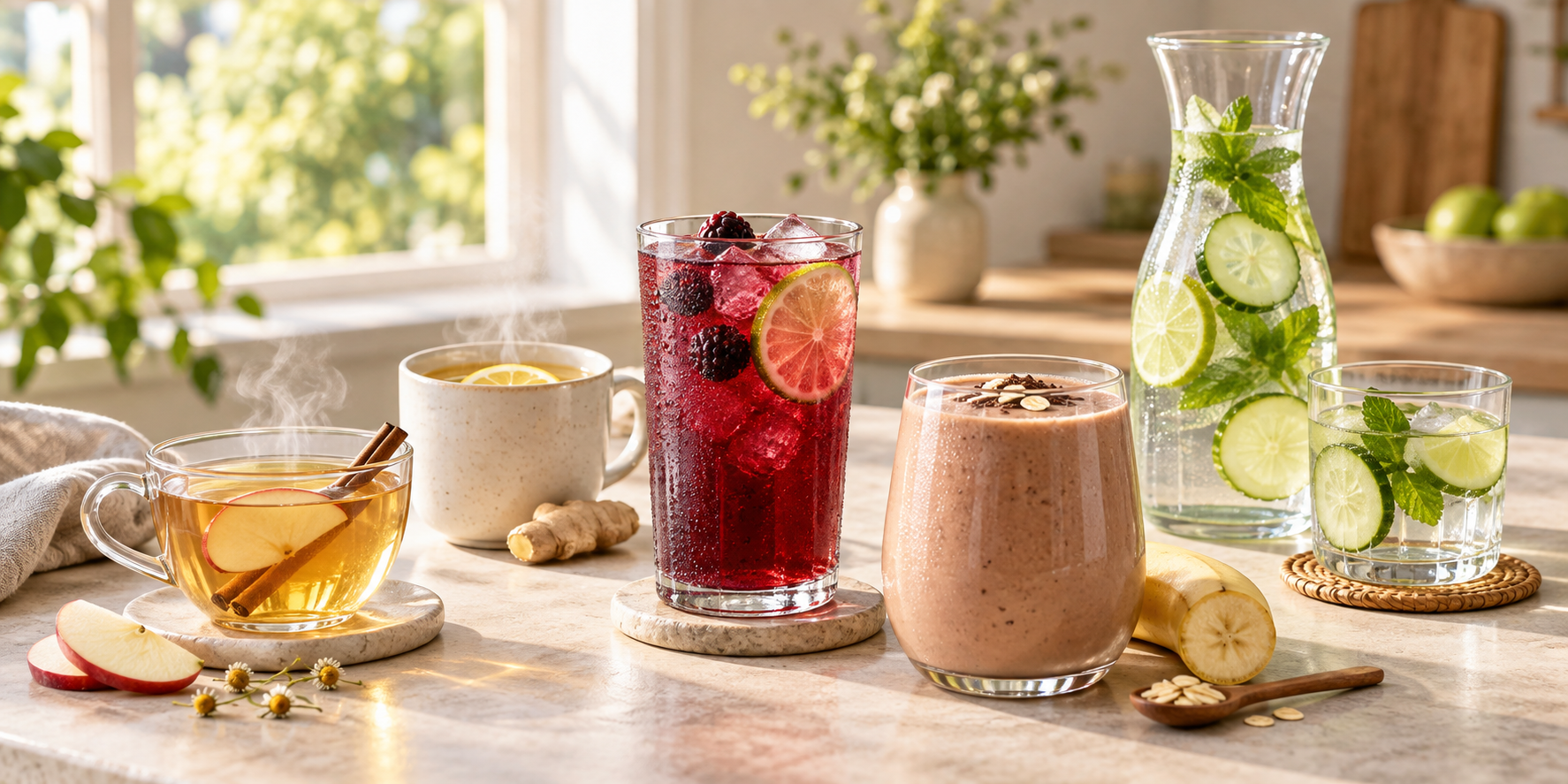
5 Natural Wellness Drinks for Your Emotional Reset
No drink can treat an anxiety disorder, depression, trauma or chronic stress. However, a nourishing drink can still play a useful supporting role within a broader emotional-wellness routine.
It may help you:
- Pause before reacting
- Replace excessive caffeine or alcohol
- Stay hydrated
- Add fruit or nourishing ingredients to your day
- Establish a comforting morning or evening routine
- Create a sensory grounding moment
1. Warm Apple Chamomile Pause Tea
This caffeine-free drink combines herbal tea with the familiar aroma of apple and cinnamon.
Ingredients
- 1 chamomile tea bag or 1 tablespoon dried chamomile
- 1 cup hot water
- 3 thin apple slices
- ¼ teaspoon ground cinnamon or 1 small cinnamon stick
- 1 teaspoon honey, optional
How to make it
- Place the chamomile, apple and cinnamon in a mug.
- Pour in the hot water.
- Cover and steep for 5 to 7 minutes.
- Strain if necessary.
- Add honey if desired and sip slowly.
Why it may help
The drink is caffeine-free, hydrating and easy to include in an evening wind-down routine. Its warmth and aroma can help create a comforting pause at the end of a demanding day.
Safety note: Avoid chamomile if you have a known allergy to ragweed, chrysanthemums, marigolds or related plants. Ask a healthcare professional before using it regularly if you take blood-thinning medication, are pregnant, breastfeeding or managing a medical condition.
2. Ginger-Lemon Grounding Tea
This bright, warming tea can be a useful alternative when stress has you reaching for another cup of coffee.
Ingredients
- 1 cup water
- 4 to 5 thin slices of fresh ginger
- 1 tablespoon fresh lemon juice
- 1 teaspoon honey, optional
How to make it
- Add the ginger and water to a small saucepan.
- Simmer gently for 5 to 10 minutes.
- Pour into a mug.
- Add the lemon juice.
- Sweeten lightly if desired.
Why it may help
The distinctive aroma and flavour of ginger and lemon can provide a sensory grounding experience. The tea is also caffeine-free and contributes to daily fluid intake.
Safety note: Ginger or lemon may aggravate heartburn in some people. Speak with a healthcare professional about frequent or concentrated ginger use if you take blood thinners or medication for blood pressure or blood sugar.
3. Hibiscus-Berry Emotional Reset Cooler
Vibrant, tart and refreshing, this cooler can replace a sugary drink or afternoon coffee while providing another way to rehydrate.
Ingredients
- 1 hibiscus tea bag or 1 tablespoon dried hibiscus
- 1 cup hot water
- ¼ cup fresh or frozen berries
- ½ cup cold water
- A squeeze of lime
- Ice
- Honey or another sweetener, optional
How to make it
- Steep the hibiscus in hot water for 5 to 7 minutes.
- Remove the tea bag or strain the flowers.
- Allow the tea to cool.
- Add the berries, cold water, lime and ice.
- Lightly press the berries with the back of a spoon to release some juice.
Why it may help
Its colour and tart flavour can make hydration more appealing for someone who struggles to drink plain water. Preparing it can also create a small afternoon reset before continuing with the day.
Safety note: Hibiscus may lower blood pressure and could interact with certain medications. Consult your healthcare provider if you have low blood pressure, take medication, are pregnant or are breastfeeding.
4. Banana, Oat and Cacao Comfort Smoothie
Stress can disrupt appetite, sometimes causing us to skip meals and later feel tired, shaky or irritable. This smoothie provides carbohydrates, fibre and protein for a more nourishing reset.
Ingredients
- 1 small banana
- ¼ cup rolled oats
- 1 teaspoon unsweetened cacao powder
- ¾ cup milk or unsweetened plant milk
- ¼ cup plain Greek yogurt or dairy-free yogurt
- A pinch of cinnamon
- 3 to 4 ice cubes
How to make it
- Add all the ingredients to a blender.
- Blend until smooth.
- Add a little more milk if needed.
- Pour into a glass and enjoy as a snack or part of breakfast.
Why it may help
The banana and oats provide carbohydrates, while the yogurt adds protein. This makes the smoothie more nourishing than tea or flavoured water when stress has affected your appetite.
For additional staying power, add one tablespoon of peanut or almond butter if appropriate for you.
5. Cucumber, Lime and Mint Reset Water
This simple infused water is ideal for busy or warm days when you suddenly realize you have barely had anything to drink.
Ingredients
- 4 cups cold water
- ½ cucumber, thinly sliced
- 1 lime, thinly sliced
- 8 to 10 fresh mint leaves
- Ice, optional
How to make it
- Place the cucumber, lime and mint in a pitcher.
- Gently press the mint leaves once or twice with the back of a spoon. Do not crush them completely.
- Add the water and ice.
- Refrigerate for approximately 30 minutes before serving.
- Keep refrigerated and use within 24 hours.
Why it may help
The natural flavour may encourage you to drink more water throughout the day. It can replace heavily sweetened beverages without requiring powders, supplements or complicated ingredients.
Mix Your Own Glow Drink
Not sure which drink to start with? Let your mood decide. Choose how you’re feeling, tap the ingredients you’re drawn to into your glass, then give it a shake. The Glow Drink Mixer will match you with one of the five calming drinks above, complete with what you’ll need and how to make it. Pour it, sip it slowly, and let it be your small reset for today.
Glow Drink Mixer
Pick how you feel, tap ingredients into your glass, then give it a shake to reveal your calming glow drink.
How are you feeling?
Tap ingredients to add them (up to 6)
These drinks are general wellness ideas, not medical treatment. Check with your doctor if you have allergies, take medication, are pregnant, or have a health condition.
Build Your Own Emotional Reset Routine
You don’t need a long routine to feel steadier. Start by noticing what you need most right now, then choose one small action that matches it. Save this chart, keep it somewhere you’ll see it, and come back to it whenever stress starts to build. One small, kind action is enough to begin.
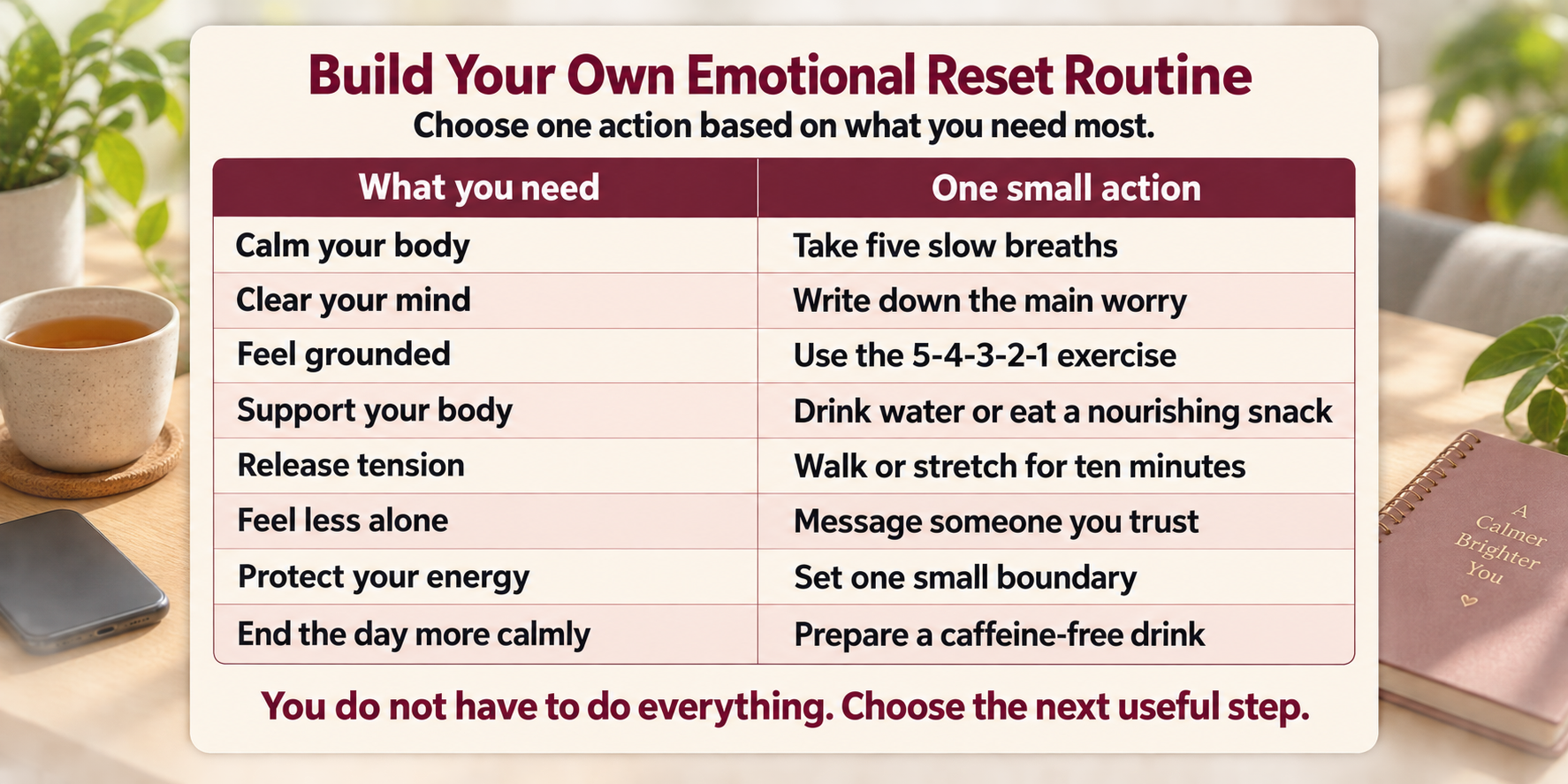
Your reset might be as simple as this: Put down the phone, prepare a warm drink, take five slow breaths and write down the one thing you can handle today.
That may not solve everything, but it can help you stop trying to carry everything at once
Maintaining Healthy Coping Skills
Coping skills are often most useful when they become part of everyday life rather than something we remember only during a crisis.
This may mean:
- Maintaining a consistent sleep routine
- Eating regular, balanced meals
- Drinking enough fluids
- Moving your body regularly
- Making time to relax
- Staying connected with supportive people
- Taking breaks from distressing news and social media
- Creating space for enjoyable hobbies
- Asking for help before reaching a breaking point
Coping does not need to be complicated. Small, consistent habits are often more realistic than trying to change your entire life whenever you become stressed.
Put Healthy Coping Into Practice
Learning about healthy coping skills is one thing; knowing what to do during a stressful moment can be more difficult. The interactive check-in below helps turn what you have learned into one manageable next step.
Pause for a moment, identify what you are feeling and choose what you need most right now. Your responses will create a personalized emotional reset with a practical action, supportive coping practice, calming drink suggestion and breathing exercise.
Your Emotional Reset Tools
Pause · Notice · Choose one practical next step.
You do not have to solve everything today. Answer a few short questions and receive one realistic reset you can use right now.
What am I actually feeling?
Choose up to three. Naming it can make it feel less confusing.
How is it showing up in my body or mind?
Choose any that fit.
What may have triggered this feeling?
Choose one. “Not sure yet” is a valid answer.
What do I need most in this moment?
Choose the option that feels most true.
How much time can I give myself?
Small resets count. Choose what is realistic.
Optional—this is simply a quick check-in.
Your Emotional Reset
Your one small step
Supporting practice
Your glow sip
A boundary you can use
Your reminder
Breathe with the glow · 4 in · 4 hold · 6 out
Ready when you are
Five slow rounds. Skip the hold if it feels uncomfortable.
.When Self-Care Is Not Enough

Breathing, journaling, movement, nourishing drinks and rest can provide meaningful support, but there are times when self-care needs to be accompanied by professional care.
Consider speaking with a qualified mental-health professional if stress or anxiety:
- Interferes with sleep, school, work or relationships
- Makes everyday responsibilities difficult
- Causes frequent panic or intense fear
- Leads to increased alcohol or substance use
- Results in ongoing hopelessness or withdrawal
- Feels impossible to manage alone
Support may come from a doctor, therapist, counsellor, school professional or another qualified mental-health provider.
If you are thinking about harming yourself, feel unsafe or believe you may be in immediate danger, contact your local emergency service or crisis service immediately.
In the United States, call or text 988 to reach the Suicide & Crisis Lifeline. If you live elsewhere, contact your local crisis line or visit Befrienders Worldwide to locate available support. You deserve support before things reach a breaking point.
A Final 1GlowWithin Reminder
Coping does not always look brave or inspiring. Sometimes it looks like cancelling something you do not have the capacity for. Sometimes it is crying, resting, drinking a glass of water or admitting that you need someone beside you. Coping skills can be learned, practised and strengthened over time. What works for one person may not work for another, and even our own needs can change from one situation to the next. We may not always be able to control what happens to us, but we can develop healthier ways to respond.
You do not have to solve your entire life today. Begin with the next kind, useful thing you can do for yourself—one breath, one boundary, one nourishing choice or one honest conversation.
- That is not doing nothing.
- That is how you begin finding your way back to yourself—from inner health to outer glow.
Which coping skill could support you today? Save this article for a difficult day and share it with someone who may need the reminder. Explore more supportive guidance on our Psychology & Mental Well-Being page.
References
Algorani, E. B., & Gupta, V. (2023). Coping mechanisms. StatPearls Publishing. https://www.ncbi.nlm.nih.gov/books/NBK559031/
Anxiety & Depression Association of America. (2010, September 8). Tips and strategies to manage anxiety and stress. https://adaa.org/tips
Birmingham Anxiety & Trauma Therapy. (2025, April 8). Why are coping skills important? https://therapistsbirmingham.com/why-are-coping-skills-important/
Centers for Disease Control and Prevention. (2026, May 12). Managing stress. https://www.cdc.gov/mental-health/living-with/index.html
Cleveland Clinic. (2025, June 16). What your emotional intelligence means for you.
https://health.clevelandclinic.org/emotional-intelligence-eq
Recent Posts