Share this article

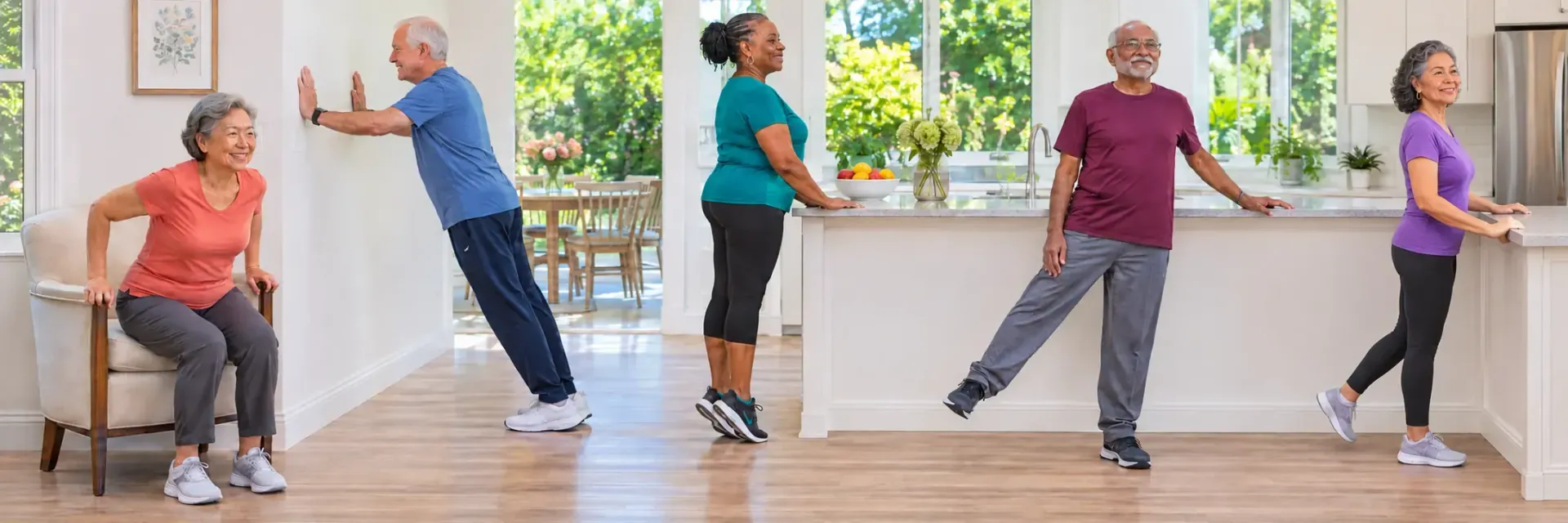
Adults over 60 doing gentle exercises at home: chair stand, wall push-up, heel raises, side leg raise and supported balance

5 Gentle Exercises for Adults Over 60


This article shares general wellness information, not medical advice. If you have a health condition, recent surgery or a history of falls, check with your doctor or physical therapist before starting a new routine.


Maybe getting up from the couch takes a little more effort than it used to. Maybe the stairs feel steeper, or you reach for the counter more often to steady yourself.

If that sounds familiar, you’re not alone. Strength and balance can improve as we get older, and a gentle starting point can make movement feel more manageable.


You don’t need a gym, special equipment or an hour a day. These five exercises use a sturdy chair, a wall and a kitchen counter. Allow about 10–15 minutes to begin, including your warm-up and rests. Take longer whenever you need to.


Want a little structure? Our free 4-Week Gentle Strength Plan, available below, gives you weekly targets, an exercise reference chart and a printable tracker.


Why Strength and Balance Matter After 60


Everyday movements involve more strength and balance than we sometimes realize. Getting out of a car, carrying groceries, climbing steps and standing at the kitchen counter all call on our muscles to work together.


Muscle strength and balance can decline with age, especially when we spend more time sitting. Giving those abilities regular attention can help support everyday movement and independence.


For adults 65 and older, the CDC recommends at least 150 minutes of moderate-intensity activity each week, muscle-strengthening activities on at least two days, and activities that improve balance.


That is a weekly goal to work toward at a suitable pace. This short routine is a starting point, alongside walking and other activities appropriate for you.


Think of it as practice, not a test.


Before You Start: A Few Safety Tips


Prepare your space before you begin:

  • Use a sturdy chair without wheels, placed against a wall so it cannot slide.
  • Choose a fixed kitchen counter or another secure surface for standing support.
  • Clear away loose rugs, cords and anything you could trip over.
  • Wear secure, supportive shoes on a nonslip floor.
  • Breathe normally. Avoid holding your breath.
  • Move slowly and stay within a comfortable range. Mild muscle effort is different from sharp pain.
  • Do the strengthening routine on nonconsecutive days, such as Monday, Wednesday and Friday, allowing recovery between sessions.
  • Stop exercising if you feel dizzy, develop pain or become unusually short of breath.


Seek emergency help for severe breathing difficulty or sudden chest pain that persists, spreads, or comes with sweating, nausea or lightheadedness.

If you feel unsteady even while holding support, ask a physical therapist for individual guidance before trying standing balance exercises.


Warm-Up: March Gently in Place

  • Spend one to two minutes easing into movement.
  • Face your counter and hold it securely. March gently in place, lifting your feet only as high as feels comfortable. Keep your hands on the counter if you need support.
  • Start slowly. You should feel comfortable and in control.


The 5 Gentle Exercises


Use the starting targets in your free plan rather than feeling you must complete the highest number listed here. Fewer comfortable repetitions are a reasonable place to begin.


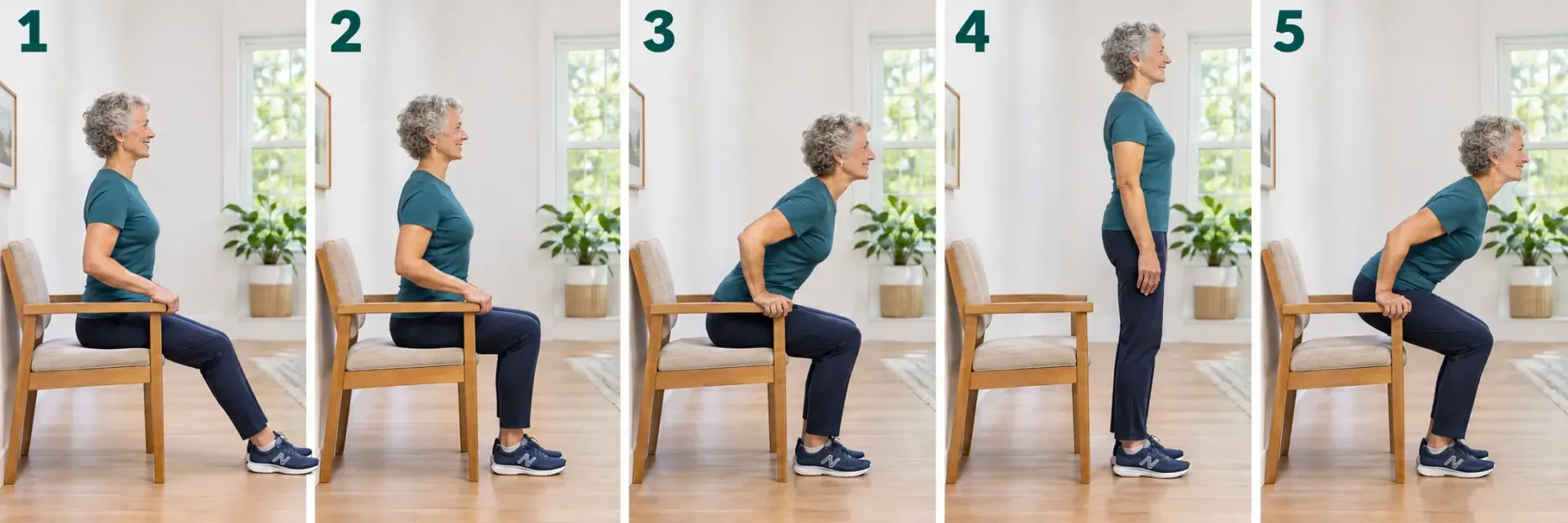
1. Sit-to-Stand — Chair Stands

Older woman showing 5 steps of the sit-to-stand exercise: feet forward, feet under knees, lean forward, stand tall and sit down with control

Good for: Building leg strength for getting up from chairs, a car seat and the toilet.


How to do it:

  1. Sit near the front of a sturdy chair with your feet flat on the floor and about hip-width apart.
  2. Bring your feet underneath your knees.
  3. Lean forward slightly from your hips.
  4. Press through your feet and stand slowly, using the armrests if needed.
  5. Pause, then lower yourself into the chair with control. Avoid dropping into the seat.


Start with: Five repetitions, or fewer if needed. Build toward 10 as comfortable.


Make it easier: Use the armrests or choose a higher, firm chair.


Make it harder: Use less help from your hands or lower yourself more slowly, provided you feel steady.


Keep the chair behind you throughout. A smooth, controlled movement matters more than finishing a particular number.


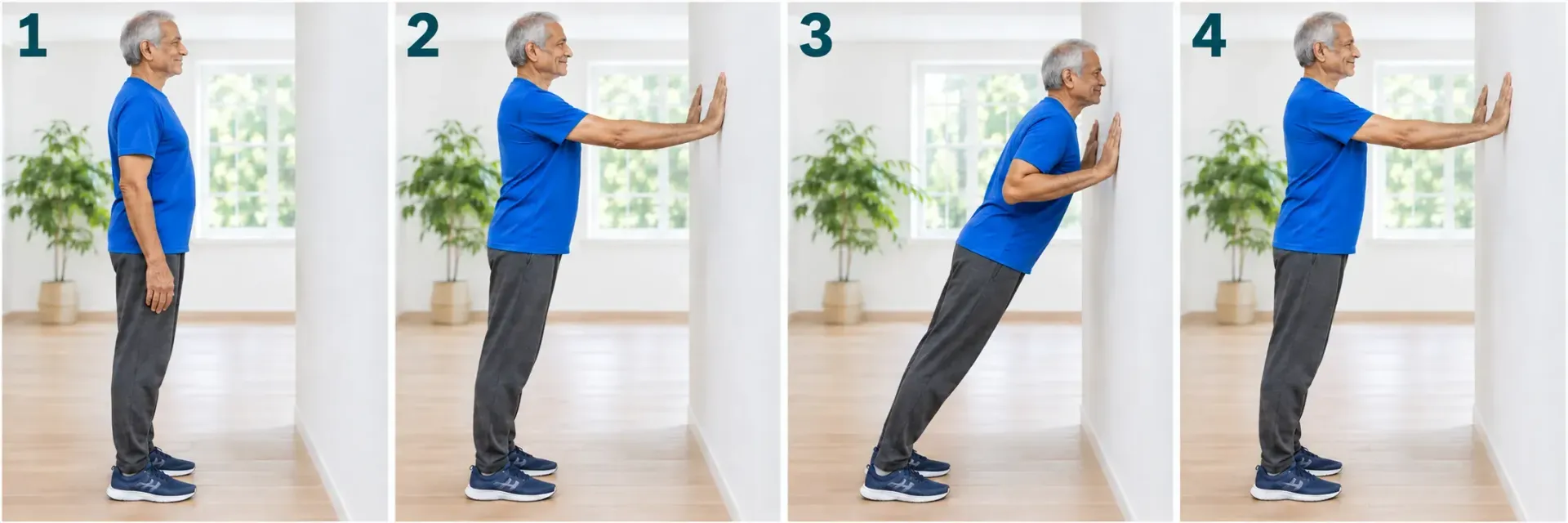
2. Wall Push-Ups

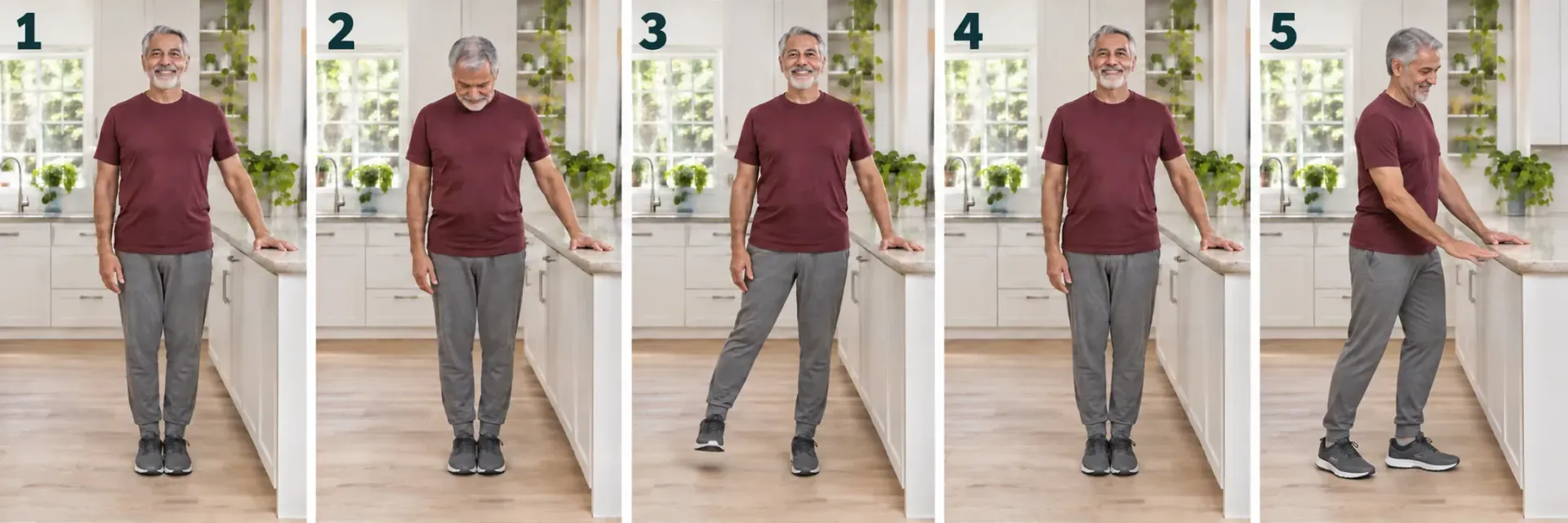
Older man showing 4 steps of a wall push-up: stand facing the wall, place palms on the wall, bend elbows toward the wall and push back

Good for: Strengthening your arms, chest and shoulders for everyday pushing tasks.


How to do it:

  1. Stand facing a wall, about an arm’s length away, with your feet hip-width apart.
  2. Place your palms flat against the wall at shoulder height and about shoulder-width apart.
  3. Slowly bend your elbows, bringing your chest toward the wall while keeping your body straight.
  4. Press through your hands to return to the starting position.


Start with: Five to eight repetitions. Build toward 10 as comfortable.


Make it easier: Stand closer to the wall.


Make it harder: Move your feet a little farther back while maintaining control.


Keep your shoulders relaxed. Stop if the movement causes wrist or shoulder pain


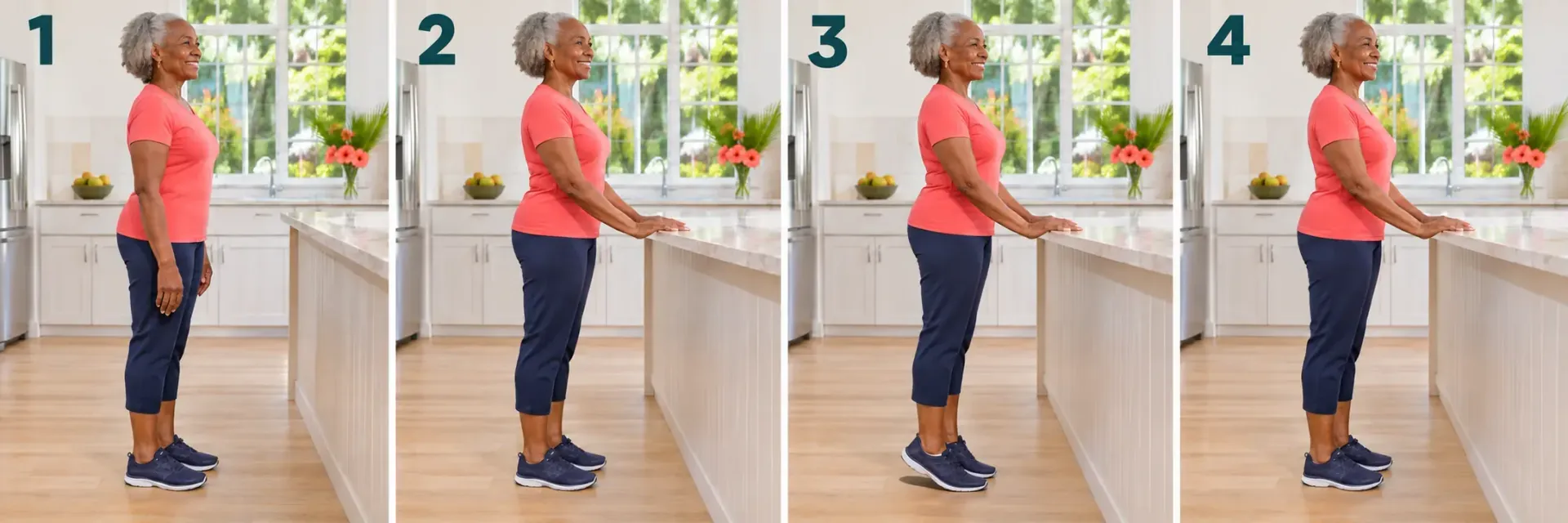
3. Heel Raises at the Counter

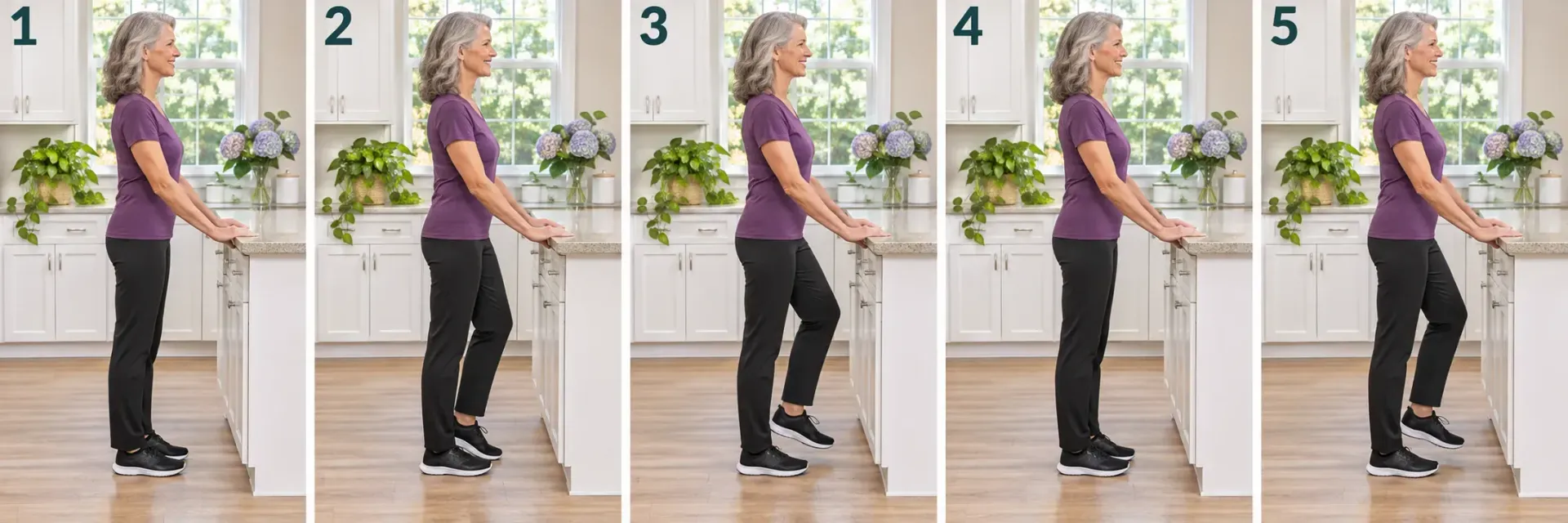
Older woman showing 4 steps of heel raises at the kitchen counter: stand tall, hold the counter, rise onto the balls of her feet and lower slowly

Good for: Strengthening your calf muscles, which help you push off as you walk.


How to do it:

  1. Stand facing your counter with your feet comfortably apart.
  2. Hold the counter with both hands.
  3. Slowly lift your heels, rising onto the balls of your feet.
  4. Hold briefly, then lower your heels with control.


Start with: Eight repetitions. Build toward 10–12 as comfortable.


Make it easier: Lift your heels only partway.


Build gradually: Add repetitions while maintaining a slow, steady pace.


Keep as much hand support as you need. You can work your calves without reducing your support.


4. Side Leg Raises

Older man showing 5 steps of side leg raises at the kitchen counter: stand tall, check toes forward, lift one leg slightly to the side, lower it and turn carefully

Good for: Working the muscles at the sides of your hips that help support steadiness when walking.


How to do it:

  1. Stand tall beside your counter, holding it for support.
  2. Keep your toes pointing forward.
  3. Slowly lift your outside leg a short distance to the side.
  4. Lower it gently without swinging or leaning.
  5. Turn carefully to practice on the other side.


Start with: Five repetitions on each side. Build toward eight to 10 as comfortable.


Make it easier: Use a smaller lift.


Make it harder: Pause for two seconds before lowering your leg.


Your leg does not need to lift high. Choose a movement you can control while keeping your upper body upright.


5. Supported Single-Leg Stand

Older woman showing 5 steps of a supported single-leg stand, holding the kitchen counter with both hands and lifting one foot slightly

Good for: Practicing balance with reliable support close at hand.


How to do it:

  1. Stand facing your counter and hold it securely with both hands.
  2. Gently shift your weight onto one foot.
  3. If you feel steady, lift your other foot slightly off the floor.
  4. Hold briefly, then place it down.
  5. Switch sides.


Start with: A hold of up to five seconds. Gradually work toward up to 10 seconds, repeating up to three times on each side.


Make it easier: Keep both feet on the floor and practice a small weight shift.


Make it harder: Use one hand or your fingertips only if you remain steady and confident.


Safety first: Keep the counter within reach throughout. Do not close your eyes or remove support to make this harder.


Cool-Down: Seated Hamstring Stretch

  • Sit near the front of your sturdy chair.
  • Extend one leg with your heel on the floor and your toes pointing upward. Keep your back comfortably straight and lean forward slightly from your hips until you feel a gentle stretch at the back of your thigh.
  • Hold for 15–20 seconds while breathing normally, then switch legs.
  • Avoid bouncing or stretching into pain.


Watch: A Short Follow-Along Routine

Prefer to follow along with video? This short routine from Physical Therapy Session shows another gentle way to work on strength and balance at home.

Video by Physical Therapy Session on YouTube. Their routine may differ from the five exercises above and suggests daily practice — at 1GlowWithin we recommend strength work 2–3 nonconsecutive days a week. Choose the movements that feel comfortable and steady for you, and keep your support close.


How to Progress Over 4 Weeks

Give yourself time to become familiar with the movements. Do the strength routine two to three days a week on nonconsecutive days, using other days for rest, walking or suitable gentle movement.


Week 1 — Get Comfortable

Choose two nonconsecutive days, such as Monday and Thursday.

Complete one round using the easier versions and the starting targets in your plan. Focus on learning the movements and noticing what feels comfortable.

Week 2 — Build the Habit

Choose two or three nonconsecutive strength days.

Continue with one round, gradually increasing repetitions if comfortable. Try a 10-minute walk on two other days, adjusting the length to your ability.

Week 3 — Add a Little More

Aim for three nonconsecutive strength days, such as Monday, Wednesday and Friday, if that feels manageable.

You may try a second round after a short rest. There is no need to add it if one round still feels challenging.

Week 4 — Make It Yours

Continue with three nonconsecutive strength days.

Complete two rounds if comfortable. You can try one harder variation when you feel ready, while keeping the support you need.


Repeating a week is completely fine. Increase one thing at a time rather than adding more repetitions, another round and a harder version together.


Free Download: Your 4-Week Gentle Strength Plan

Remembering the exercises is easier when you have something simple to follow.


Our free 4-Week Gentle Strength Plan brings the routine together in one printable guide, with gradual targets and space to record what you can comfortably do.


Inside your free plan:

  • A week-by-week guide with targets for all five exercises.
  • A printable exercise reference chart.
  • A four-week tracker for your strength sessions and walks.
  • Reminders about rest days, support and moving at your own pace.

Keep it near your exercise space or on the fridge—somewhere it can offer a gentle reminder.


👉 Get My Free 4-Week Plan


How to Make This a Habit

A routine is often easier to keep when it fits into the day you already have.

  • Choose your strength days. Put two or three nonconsecutive sessions on your calendar.
  • Connect them to a familiar habit. Try after breakfast or another time when you usually feel comfortable moving.
  • Keep your plan visible. Let it remind you without becoming another source of pressure.
  • Notice small changes. An extra comfortable repetition or a smoother chair stand can be worth recording.
  • Enjoy some company. Invite a friend or partner if moving together makes the experience more enjoyable.

If you miss a session, return on your next suitable day. You do not need to double the routine to catch up.


When to Talk to Your Doctor

  • Ask your doctor or a physical therapist for guidance before starting if you have had a recent fall, surgery or joint replacement, or if you have a heart condition, osteoporosis, dizziness or unsteady balance.
  • Individual advice is also helpful if pain or fear of falling is keeping you from moving.
  • A physical therapist can assess your needs and show you suitable adjustments. Having a clear starting point can make the routine feel less uncertain.


The 1GlowWithin View

Getting stronger after 60 can begin with something ordinary: standing from your chair with a little more control, making time for a short walk or practicing a movement until it feels more familiar.


Give yourself room to start gently. Keep the support you need. Let rest be part of the routine.


You do not have to do everything today to take a worthwhile step.

Begin with Week 1 of your free plan, and visit 1GlowWithin Glow Tips for more gentle, realistic ways to care for your well-being.


Sources and Further Reading

Recent Posts

Coping Skills for Stress and Anxiety
By 1GlowWithin • September 23, 2026
Discover healthy coping skills for stress and anxiety, emotional intelligence tips, 5 wellness drink recipes and practical tools for calmer routines.
matcha lattes
By 1GlowWithin • September 23, 2026
fall matcha latte recipes—apple-cinnamon, pumpkin spice and vanilla chai—with exact measurements, lower-sugar options and easy homemade tips.
Two friends enjoying a peaceful fall moment surrounded by vibrant autumn leaves and warmth
By 1GlowWithin • September 1, 2026
Discover 10 simple fall wellness ideas to feel grounded, energized and supported through seasonal changes without pressure, perfection or expensive routines.
Multi-generational family enjoying a summer beach vacation together outdoors.
By 1GlowWithin • June 17, 2026
Family vacations can create lasting memories and they can also bring stress, planning challenges, family dynamics, and budget concerns.
Person gazing out a window beside a mug, notebook, and potted plant in warm morning light
By 1GlowWithin • May 3, 2026
A compassionate guide to the emotional, financial and family challenges of a midlife cancer diagnosis, plus gentle self-care to use alongside medical treatment.
Two people sitting apart on a couch in a softly lit living room, looking away from each other
By 1GlowWithin • April 8, 2026
Discover why intimacy fades in relationships due to stress, life changes, and emotional burnout—and how to rebuild connection with practical, realistic steps.
Family sitting on a flowered blanket in a sunny garden near a waterfall, smiling and sharing a picnic
By 1GlowWithin • April 3, 2026
Feeling exhausted even after resting? This gentle spring reset helps you rebuild energy, calm your nervous system, and restore your natural glow—no extremes needed.
Assorted fresh fruits, vegetables, grains, fish, and spices arranged on a kitchen counter
By 1GlowWithin • March 20, 2026
A simple head-to-toe superfood checklist for spring: what to eat for energy, digestion, skin, hair and heart, plus two easy recipes. No detox, just real food.
Shrimp fried rice in a black skillet, garnished with herbs, with lime wedges and small bowls of ingredients nearby
By 1GlowWithin • March 8, 2026
Learn how to make healthy shrimp fried rice that’s better than takeout. This quick high-protein recipe is packed with vegetables, flavor, and easy steps.
Daniel Fast meals with quinoa, lentils, vegetables, fruit and water.
By 1GlowWithin • March 3, 2026
Explore Daniel-inspired plant-based recipes, breakfast bowls, lunches, dinners and desserts, plus free fiber guidance and meal ideas for your 21-day fast.
Show More