
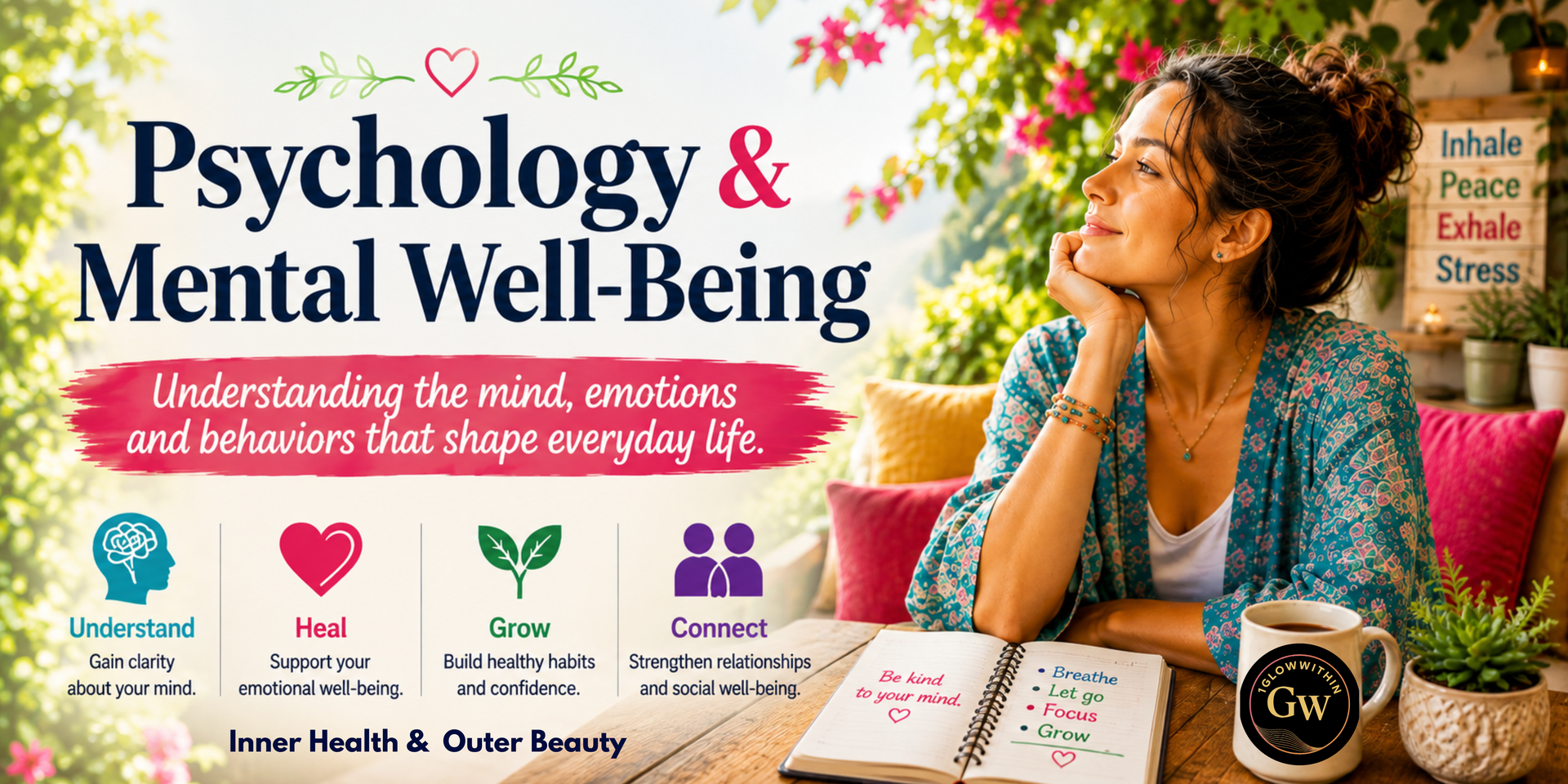
Psychology & Mental Well-Being: Understanding Everyday Psychology
The way we think, feel, respond and connect affects every part of our lives. Psychology & Mental Well-Being explores the science behind our thoughts, emotions, behaviors and relationships—turning complex topics into practical information that can help us better understand ourselves and others.

Thoughts & Emotions
Explore how our thoughts, emotions and past experiences can influence the way we see situations, make decisions and respond to everyday life.

Behavior & Habits
Understand why we form certain habits, what influences motivation and how our emotions and environment can shape everyday behavior

Relationships & Connection
Explore how communication, relationships, social connection and life experiences can influence our emotional well-being and relationships.
Practical Tools for Everyday Mental Well-Being
Simple, everyday practices that may support emotional balance, self-awareness and a greater sense of connection.
Mindful Breathing
Use slow, intentional breathing to create a moment of pause, bring attention back to the present and help the body settle during stressful moments.
Journaling for Emotional Clarity
Use journaling to put thoughts and feelings into words, notice patterns and create space to reflect on what may be influencing how you feel.
Building Support Networks
Nurture meaningful connections with people you trust. Feeling heard, supported and connected can make a meaningful difference in how we navigate everyday challenges.
Movement & Mental Reset
Use gentle movement or stretching as a chance to step away, release built-up tension and give your mind a change of pace during the day.
Nutrition & Brain Health
Choose a variety of nutrient-rich foods that support normal brain function, while building balanced eating habits that contribute to your overall health and well-being.
Meditation & Mindful Pause
Create a few quiet moments to slow down, notice your thoughts without judgment and gently bring your attention back to the present.
Using Psychology for Personal Growth
Understanding why we think, feel and respond the way we do can help us recognize patterns, strengthen self-awareness and make more intentional choices in everyday life.
Recognize Your Patterns
Notice the thoughts, emotions, habits and reactions that repeatedly affect your well-being. Recognizing these patterns can help you understand where your time, energy and self-care may need greater support.
Understand Your Triggers
Identify situations, demands and daily habits that increase stress or emotional overload. Recognizing your triggers and early warning signs may help you respond before exhaustion develops into burnout.
Build Self-Awareness
Pause and notice how your thoughts, emotions, behaviours and physical needs influence one another. A simple personal check-in can help you understand what you need today.
Make Intentional Choices
Use what you learn about yourself to make realistic choices that reflect your needs, values and available time. Small adjustments can make wellness easier to maintain in everyday life.
Coping Skills for Stress and Anxiety
Stress can affect our thoughts, emotions, behaviour and physical well-being. Explore healthy coping strategies, learn how to recognize your stress signals and triggers, and use the interactive Emotional Reset Tool to choose one manageable next step.
Know When to Seek Support
Healthy coping skills can help with everyday stress, but persistent or overwhelming emotional challenges may require additional support. Recognizing when you need help is also part of self-awareness and personal growth.
NEW FROM 1GLOWWITHIN KIDS
Helping Children Understand Scoliosis Through Story, Courage & Connection
Discovering the Secrets of Scoliosis: The Magical Adventures of Oli & Mia — Second Edition
A scoliosis diagnosis can bring lots of questions—especially for a child. Join Oli and Mia on a magical adventure that helps young readers understand scoliosis while exploring courage, friendship, confidence and self-acceptance.
Inside the adventure:
✓ Child-friendly scoliosis explanations
✓ Try It Together activities
✓ Questions for children & grown-ups
✓ Drawing, writing & reflection pages

37-page interactive illustrated PDF e-book • Instant digital download
For educational and inspirational purposes. Not a substitute for professional medical advice, diagnosis or treatment.
Professional Support When You Need It
There are times when talking things through with someone you trust can help and times when you may need a little more support. If anxiety, depression or emotional challenges are making everyday life feel harder, connecting with a qualified professional can give you a safe space to talk, feel heard and explore what may help.
Brightside Health offers online access to licensed therapists and psychiatric providers, making professional support available from the privacy and comfort of home. You can start with a free consultation to explore whether Brightside may be right for you.
Affiliate disclosure: 1GlowWithin may earn a commission if you choose to use this link, at no additional cost to you.
Need Urgent Support?
If you or someone you know is in immediate danger, experiencing a mental health crisis or thinking about self-harm, please seek help right away. Contact your local emergency services or a crisis support service in your country.
U.S. visitors: Call or text 988 for free, confidential crisis support.