







Pomegranate Benefits: What Science Says & How to Enjoy It
By the 1GlowWithin Team · Updated October 2026
Affiliate disclosure: This article contains affiliate links. If you purchase through them, 1GlowWithin may earn a commission at no extra cost to you.
Have you ever bought a pomegranate, put it in the fruit bowl and kept walking past it because opening it felt like a project? You’re not alone.
But inside that tough skin are little ruby-red bursts that can make an ordinary meal more enjoyable. A spoonful over yogurt. A handful scattered across a salad. Something sweet, tart and crunchy to brighten what you already eat.
Pomegranate also brings fiber, nutrients and plant compounds worth knowing about. Researchers have explored its potential health benefits, including its effects on blood pressure.
Here is what makes this fruit worth bringing home—and how to enjoy it without making your routine more complicated.
First, What Are Those Little Red Pieces?

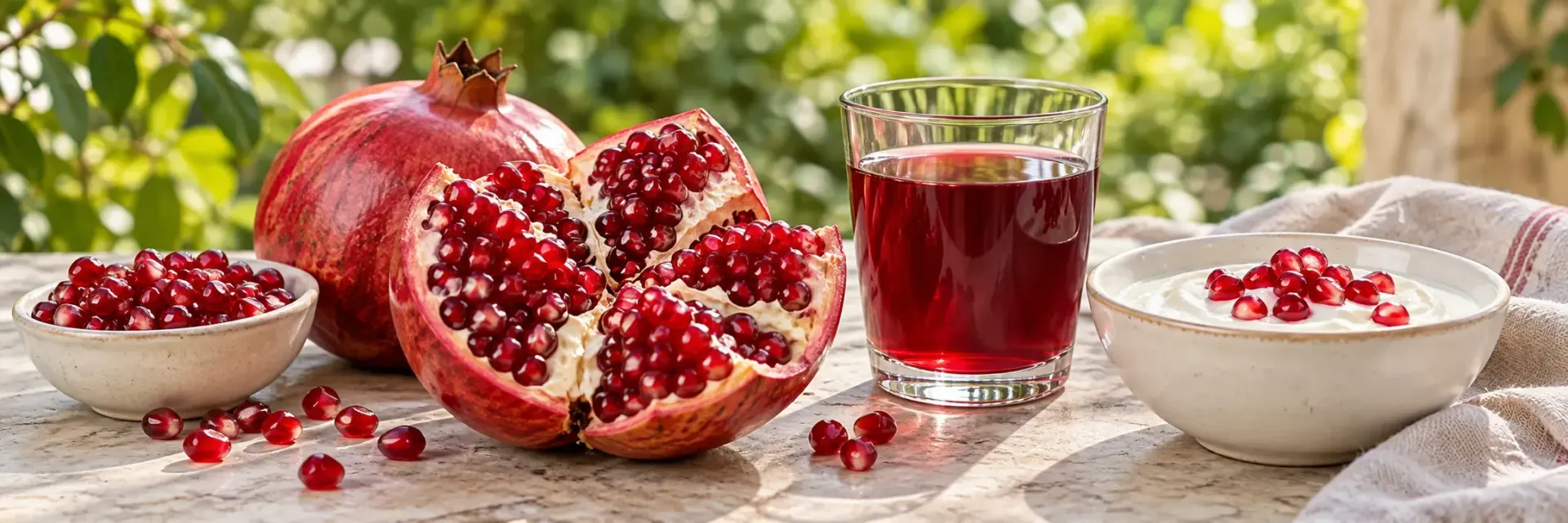
They’re called arils: juicy coverings wrapped around small seeds. For most people, the whole aril is edible, including the crunchy seed. You can enjoy the juice and texture together without picking out every seed. Remove the tough outer peel and the bitter white membrane. The arils are the part you want on your plate.
What Makes Pomegranate Good for You?
Fiber That Contributes to Digestive Health
Whole pomegranate arils provide dietary fiber, which supports normal bowel function and helps you meet your daily fiber needs. It is one reason to enjoy the fruit itself, even if you also like the juice. Strained juice generally contains little fiber. Try adding a few spoonfuls to breakfast. It is a small, enjoyable way to bring another fiber-containing food into your day.
Antioxidant Plant Compounds
Pomegranate contains polyphenols, including anthocyanins associated with its beautiful red color. These compounds have antioxidant activity. Antioxidants help counter processes involving free radicals, which is one reason colorful plant foods attract research interest. The benefits of an overall eating pattern matter more than any single ingredient. Pomegranate gives you another flavorful option to include alongside other fruits and vegetables.
Promising Research for Blood Pressure
Human studies have explored pomegranate juice and extracts, with some reporting reductions in blood pressure. NCCIH describes a possible benefit while noting that more research is needed to confirm the effect. That is encouraging and gives us a reason to keep learning about this fruit.
It does not mean a glass of juice replaces medication or guarantees a particular result. Pomegranate can sit comfortably within a heart-friendly eating pattern that also includes balanced meals, movement and appropriate medical care.
Nutrients Your Body Uses Every Day

Pomegranate arils contribute nutrients such as vitamin C and potassium, with the amounts depending on your portion. Vitamin C supports normal immune function and collagen formation. Potassium helps nerves and muscles function normally.
You do not have to expect a dramatic change to appreciate those everyday contributions. Nourishment comes from the foods you eat regularly, working together over time.
Skin Health: Support From Within

Eating well is part of caring for your skin, and pomegranate has some interesting research behind it.
In a 12-week study involving 74 women, those consuming pomegranate juice or extract needed a higher dose of UVB light to produce skin redness compared with the placebo group. This suggests a possible benefit for the skin’s response to UV-related stress.
That is an encouraging finding, although it does not establish that pomegranate removes wrinkles or reverses aging. It also does not replace sunscreen.
For everyday life, think of pomegranate as an enjoyable addition to a varied diet that nourishes your skin along with the rest of you.
Plant Compounds With Anti-Inflammatory Potential
Pomegranate contains polyphenols, including compounds called ellagitannins, that researchers are studying for their antioxidant and anti-inflammatory effects.
Some human studies have reported improvements in certain markers of inflammation. Results vary with the preparation, amount consumed and people taking part, so a serving of fruit cannot be promised to produce the same effect.
Still, this research gives us another reason to appreciate pomegranate alongside other colorful plant foods. Adding arils to a salad or breakfast bowl is a simple way to bring more variety to your plate.
Exercise and Recovery: An Interesting Area of Research
If you enjoy walking, cycling or strength training, you may be interested in research exploring pomegranate and exercise.
Some small studies of pomegranate juice or extracts have reported benefits for endurance or recovery. Others have found little benefit, so the results remain mixed. Researchers are still working out which preparations and amounts might help.
You can enjoy pomegranate as part of your eating routine around activity—for example, arils with yogurt after a workout—without needing to treat it as a performance supplement.
A Simple Way to Understand the Science

Pomegranate offers both everyday nourishment and some promising possibilities. Whole arils provide fiber and nutrients. Researchers are also exploring how pomegranate juice and extracts may influence blood pressure, skin responses, inflammation and exercise recovery.
Some findings are encouraging. For example, research suggests that pomegranate juice or extract may help lower blood pressure, although further studies are needed to confirm the effect.
The important detail is that studies use different forms and amounts. A concentrated extract, a glass of juice and a spoonful of arils are not interchangeable.
That leaves plenty to appreciate: a flavorful fruit with nutritional value today and an interesting body of research continuing to grow.
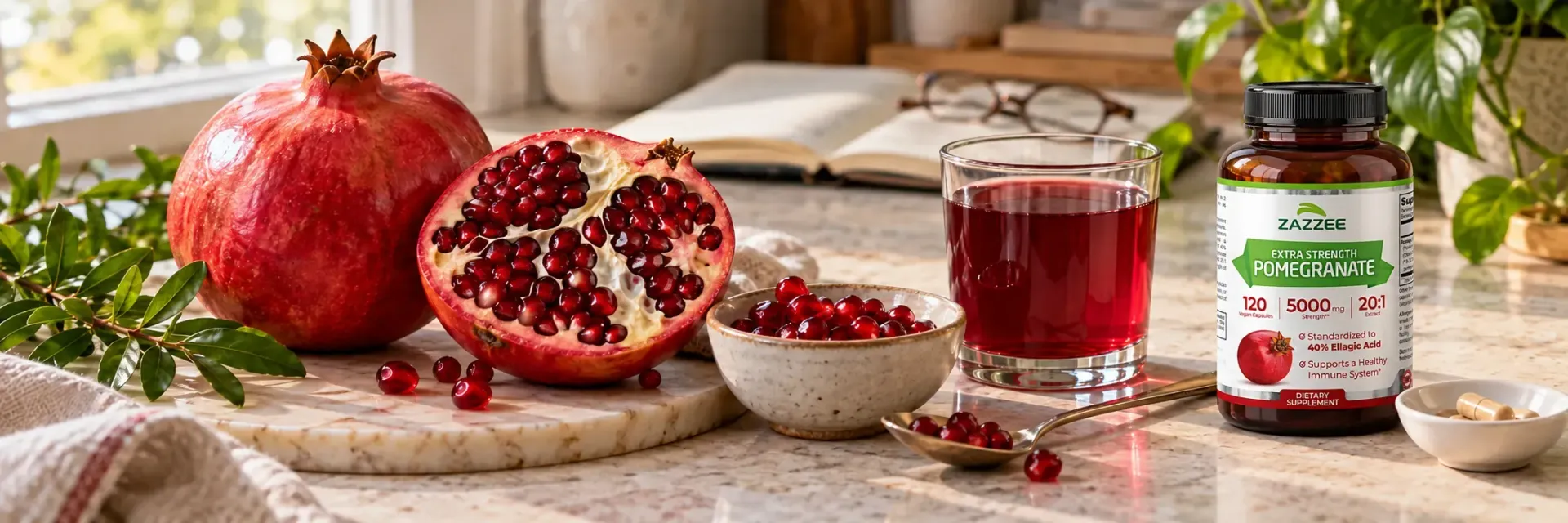
Considering a Pomegranate Supplement?
If you’re interested in a concentrated form, compare the ingredient list, extract amount and serving directions. The research discussed here does not establish that every supplement provides the same benefits. If you take medication, ask a pharmacist to review the product before use. 👉Shop Pomegranate Supplements
Whole Fruit or Juice? Choose What Fits Your Day
Whole Arils for Crunch and Fiber
If you enjoy texture, the arils are hard to beat. Scatter them over warm oatmeal, stir them into plain yogurt or add them to a grain bowl. They bring a refreshing contrast to leafy greens and roasted vegetables, too. Prepackaged arils can save time. Compare the price with whole fruit and follow the package’s storage instructions.
Juice for Convenience and Flavor
Pomegranate juice can be an easy way to enjoy its sweet-tart flavor. Look for 100% pomegranate juice if that is what you want, and check the ingredient list. A juice drink or blend may contain other ingredients. “No added sugar” does not mean sugar-free. Juice contains naturally occurring sugars, so serving size matters, especially if you count carbohydrates. A small glass may suit you. Or try a splash in sparkling water for a lighter-tasting drink.
Opening a Pomegranate Is Easier With a Little Practice

Give yourself a washable surface and a few minutes. The juice can stain, so protect clothing from splashes.
- Wash the outside of the fruit.
- Carefully cut around the crown and lift it away.
- Lightly score the peel along the natural sections.
- Gently pull the sections apart.
- Loosen the arils into a bowl and remove the white membrane.
If you prefer, separate the sections in a bowl of drinking water. Much of the membrane floats while the arils sink. Skim away the membrane, then drain.
Once it is open, you have something ready to add to several meals.
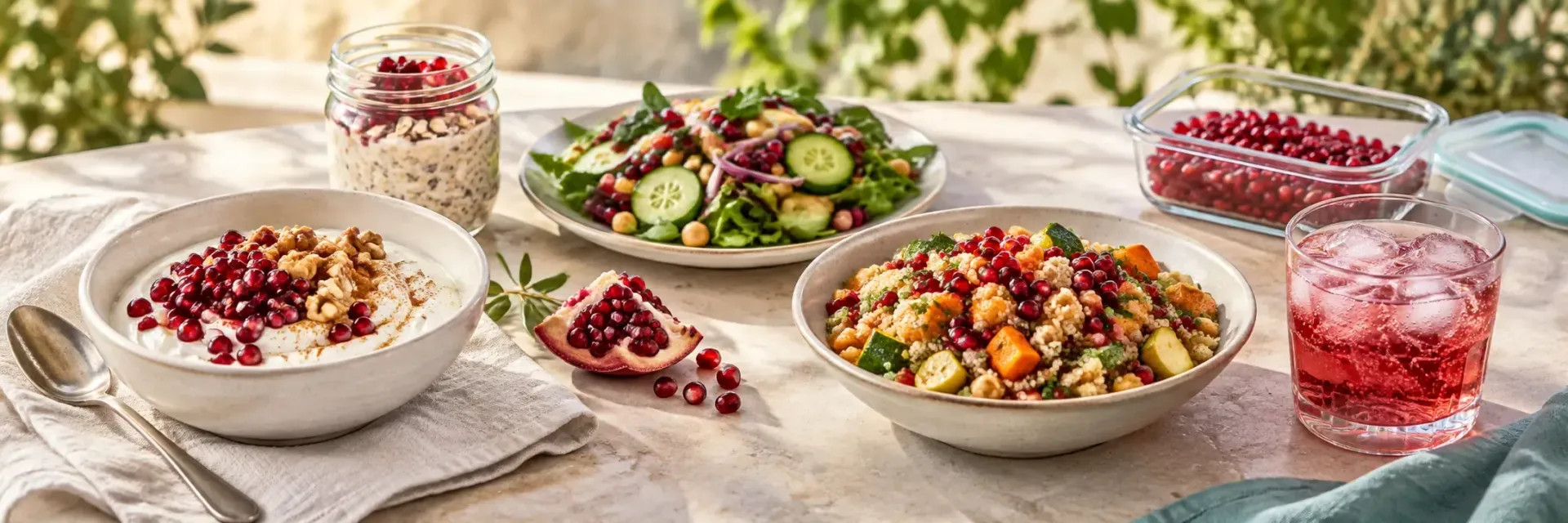
Five Easy Ways to Enjoy Pomegranate

Give Breakfast a Little Color
Add arils to oatmeal, plain yogurt or overnight oats. Their juicy crunch can make a familiar breakfast feel fresh again.
Brighten a Salad
Try leafy greens, cucumber, chickpeas and pomegranate with an olive oil–lemon dressing.
Finish a Grain Bowl
Scatter arils over quinoa, roasted vegetables and your preferred protein just before serving.
Make an Afternoon Sparkling Drink
Pour a splash of 100% pomegranate juice into cold sparkling water. Adjust the amount to your taste.
Keep Some for Another Day
Freeze drained arils in a single layer, then transfer them to a freezer-safe container. Use them in smoothies or thaw a small portion for a topping.
Try This: Pomegranate Yogurt Crunch
For a morning when you want something enjoyable without much preparation—or an afternoon when you need a simple snack.
Makes one serving
Ingredients
- ¾ cup plain Greek yogurt or an unsweetened alternative
- ¼ cup pomegranate arils
- 1 tablespoon chopped walnuts or pumpkin seeds
- A small pinch of cinnamon, optional
Method
- Spoon the yogurt into a bowl.
- Add the pomegranate arils.
- Sprinkle with walnuts or pumpkin seeds.
- Finish with cinnamon, if desired.
For a dairy-free version, check your yogurt alternative’s protein content, as products vary.
Adjust the portion to your appetite and needs. Enjoy it as a snack or part of breakfast.
Choosing and Storing Your Fruit

Look for a pomegranate that feels heavy for its size, without mold, leaking areas or large soft spots. Skin color varies by variety, so the reddest fruit is not automatically the best choice.
Refrigerate removed arils promptly in a clean, covered container and use within a few days. Follow the package directions for commercially prepared arils. For juice, check the label for refrigeration and use-after-opening instructions.
A Few Things to Keep in Mind
Pomegranate is generally well tolerated as food, although allergies and digestive discomfort can occur. Concentrated extracts and supplements are different from ordinary food portions. Ask a pharmacist or healthcare professional before using them if you take medication. Stick to the edible arils and food-grade juice rather than homemade preparations from the root, stem or large amounts of peel. For children, serve foods in a form appropriate to their age and chewing ability.
The 1GlowWithin View
Sometimes the food that helps you enjoy eating well is a small addition. A spoonful of pomegranate might make you look forward to your yogurt. Its bright flavor might be what brings you back to a homemade salad. That enjoyment matters. It makes nourishing choices easier to return to. If pomegranate is new to you, start with one fruit or a small container of arils.
Add it to something familiar and see what you like. There is plenty to appreciate in those little red seeds—starting with how they taste.
Explore more everyday nutrition ideas in 1GlowWithin Glow Tips.
Sources and Further Reading
- NCCIH: Pomegranate—Usefulness and Safety
- Utah State University Extension: How to Use Pomegranates
- Utah State University Extension: Preserving and Storing Pomegranates
- UCLA Health: Health Benefits of Pomegranates Extend Throughout the Body
- Scientific Reports: Pomegranate Juice, Extract and Skin Response to UVB—A Randomized Trial
This article provides general information and does not replace individual medical or nutrition advice.