Hibiscus Rose Lemonade: A Refreshing Drink to Make and Share
By the 1GlowWithin Team · Updated October 2026
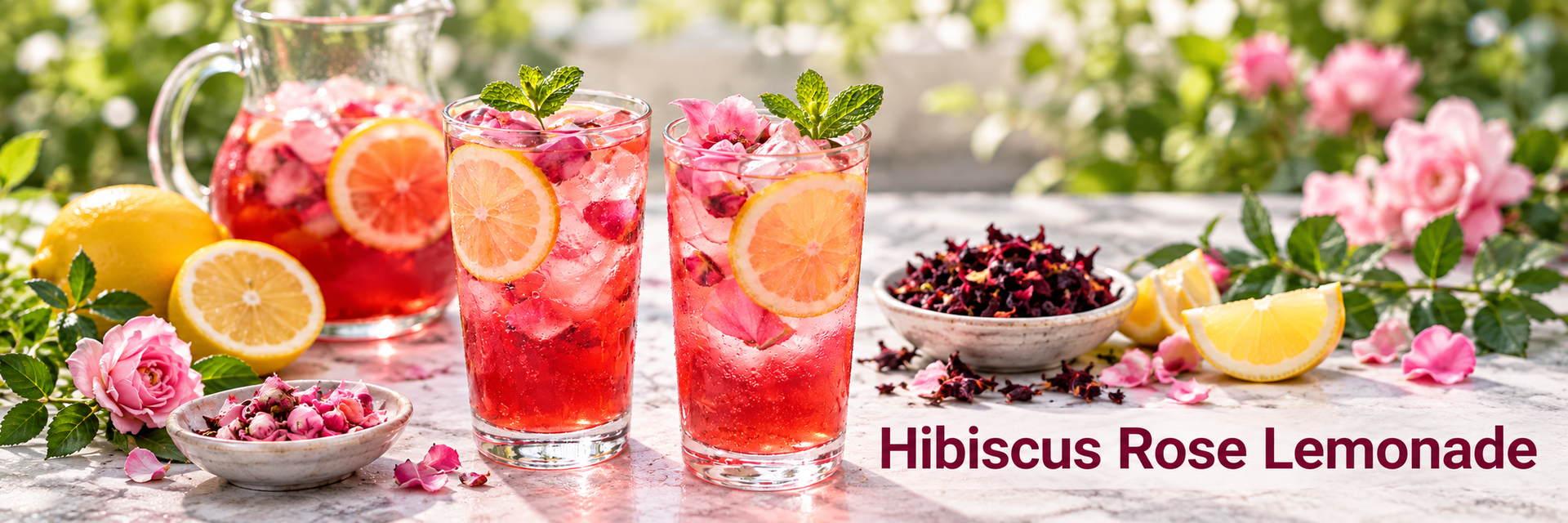
Some days, you want something different in your glass. Hibiscus rose lemonade brings together tart hibiscus, fresh lemon and a small splash of rose water for a refreshing drink with a floral finish.
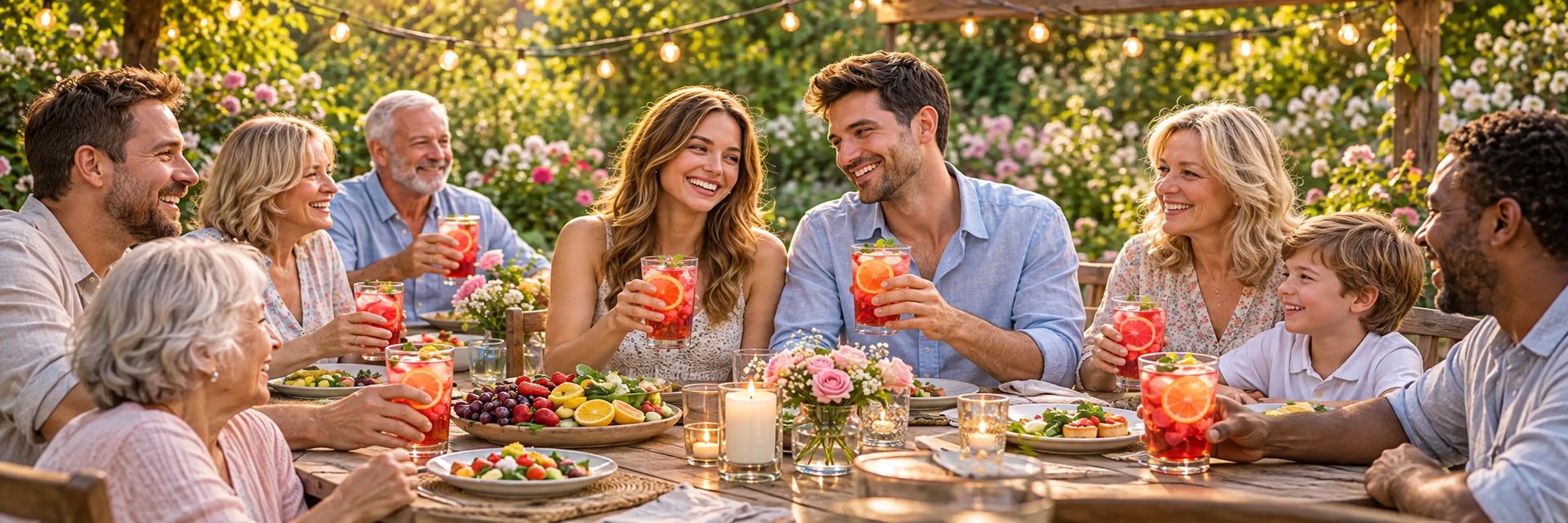
Serve it over ice with lunch, make a pitcher when friends come over or enjoy a glass on the porch. Made with pure hibiscus, it’s naturally caffeine-free.
At 1GlowWithin, we enjoy exploring food and drinks without turning every ingredient into a health promise. This recipe is here for its flavor. We’ll also explain what research on its ingredients can—and cannot—tell us.
For more about choosing hibiscus, preparing it and understanding the research, visit our Hibiscus Tea: Recipes, Research & Safety guide.
Affiliate disclosure: This article contains Amazon affiliate links. As an Amazon Associate, 1GlowWithin earns from qualifying purchases, at no extra cost to you.
This article shares general wellness information and recipes. It is not medical advice.
Meet the Ingredients
Hibiscus

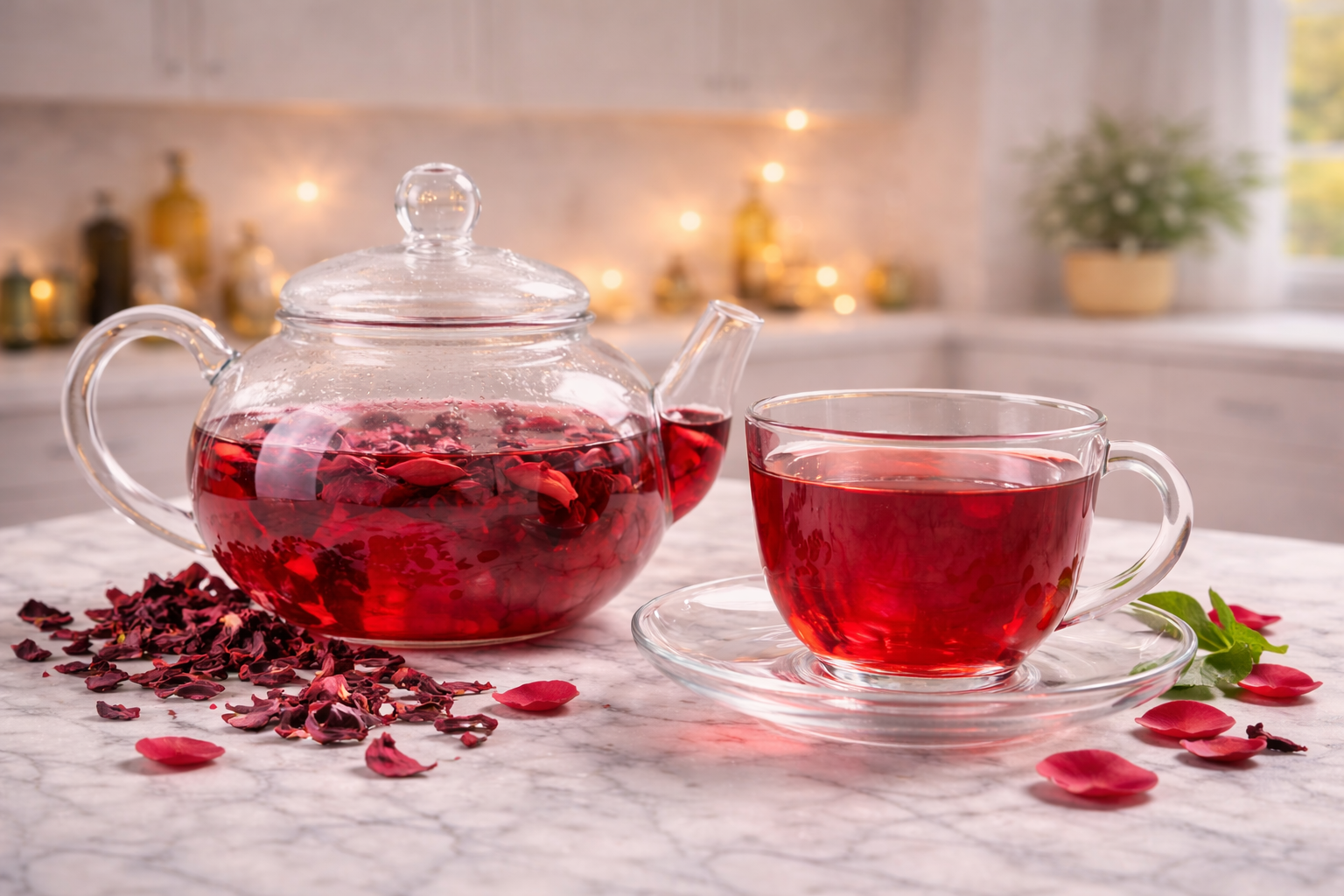
Food-grade Hibiscus sabdariffa gives this lemonade its rich red color and tart flavor, often compared to cranberry.
The dried pieces are commonly labeled “hibiscus flowers.” They are usually the calyces, the fleshy parts at the flower’s base.
Choose hibiscus sold for tea or cooking.
Check blends for extra herbs or caffeine, and follow the preparation instructions provided on the product packaging.
Fresh Lemon

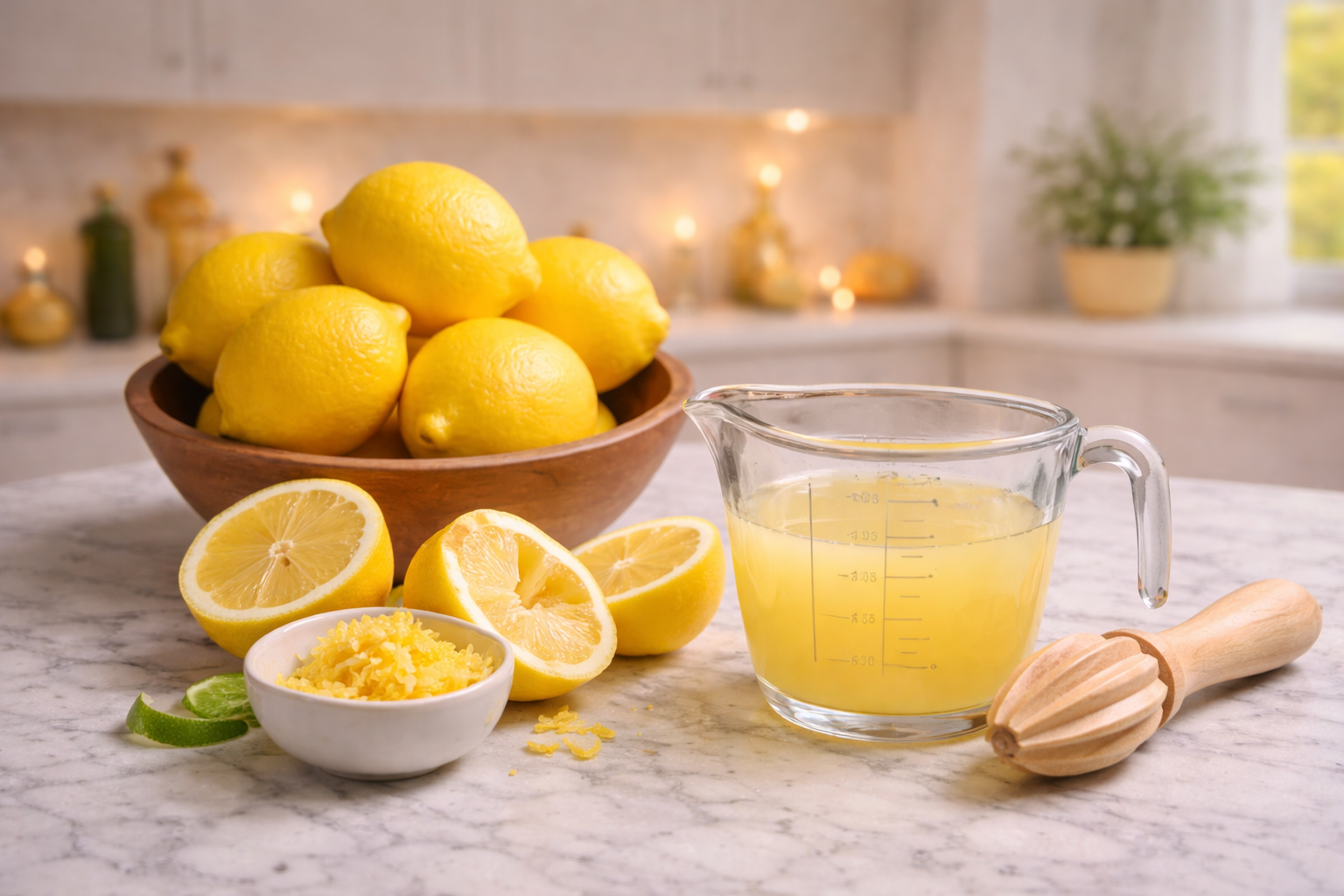
Fresh lemon gives this lemonade a bright citrus flavor and extra tartness.
Start with less for a milder drink.
Lemon contributes vitamin C, which your body needs to make collagen and absorb iron from plant foods.
These nutrient roles do not mean this lemonade treats low iron or improves skin.
Add lemon gradually, tasting as you go to balance the flavor.
Food-Grade Rose Water

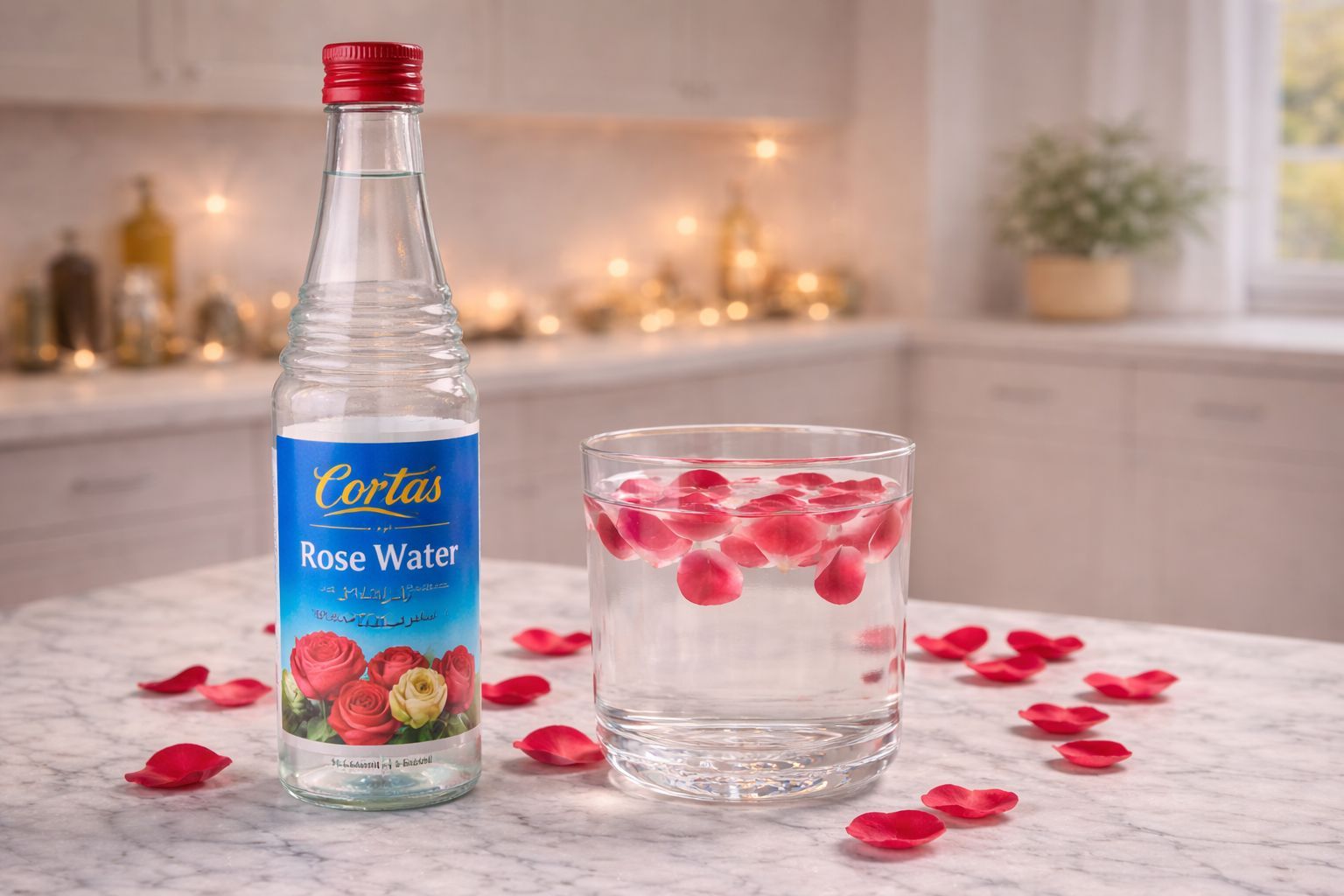
Culinary rose water gives this lemonade a floral aroma without adding sweetness.
A few drops may be all you need.
Choose rose water clearly labeled for cooking or food use, and follow the directions on its packaging.
Add it gradually and taste before adding more, since strengths vary between products.
Rose water intended for skincare should not be used in drinks.
Hibiscus Rose Lemonade Recipe
Makes approximately four small servings, depending on dilution and ice.

Ingredients
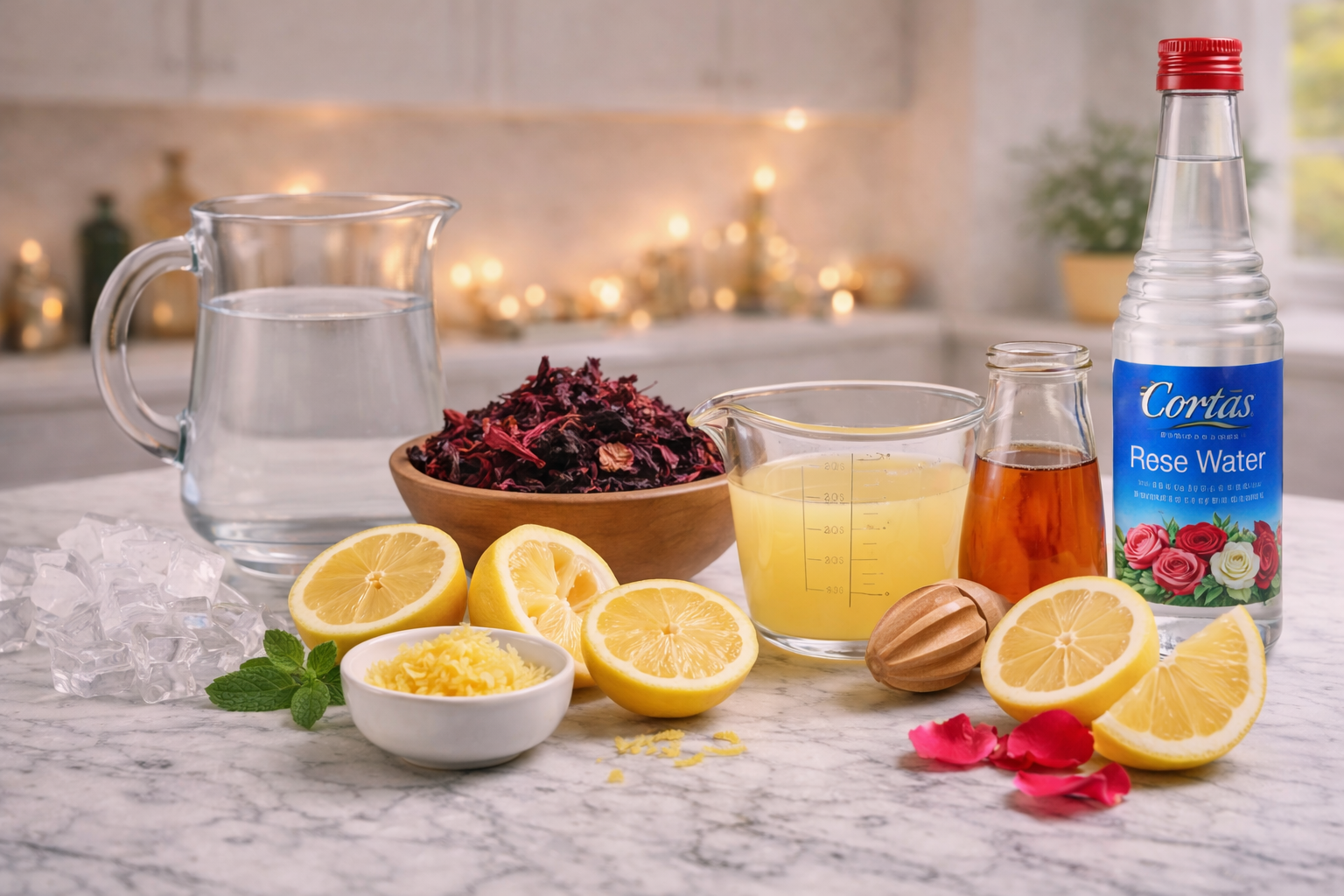
- 2 cups water
- 2 tablespoons food-grade dried hibiscus
- ¼–½ cup freshly squeezed lemon juice, to taste
- 2–3 tablespoons honey or maple syrup, optional and to taste
- Up to ½–1 teaspoon culinary rose water, depending on its strength and label directions
- 1–2 cups cold still or sparkling water
- Ice
- Optional garnish: mint, lemon slices or food-grade edible rose petals
Before you start: Rose water varies in strength. Begin with a few drops rather than pouring in the full amount.
Use only rose petals sold for food use or reliably identified edible roses grown without treatments unsuitable for food plants. Florist roses are not a food garnish.

Method
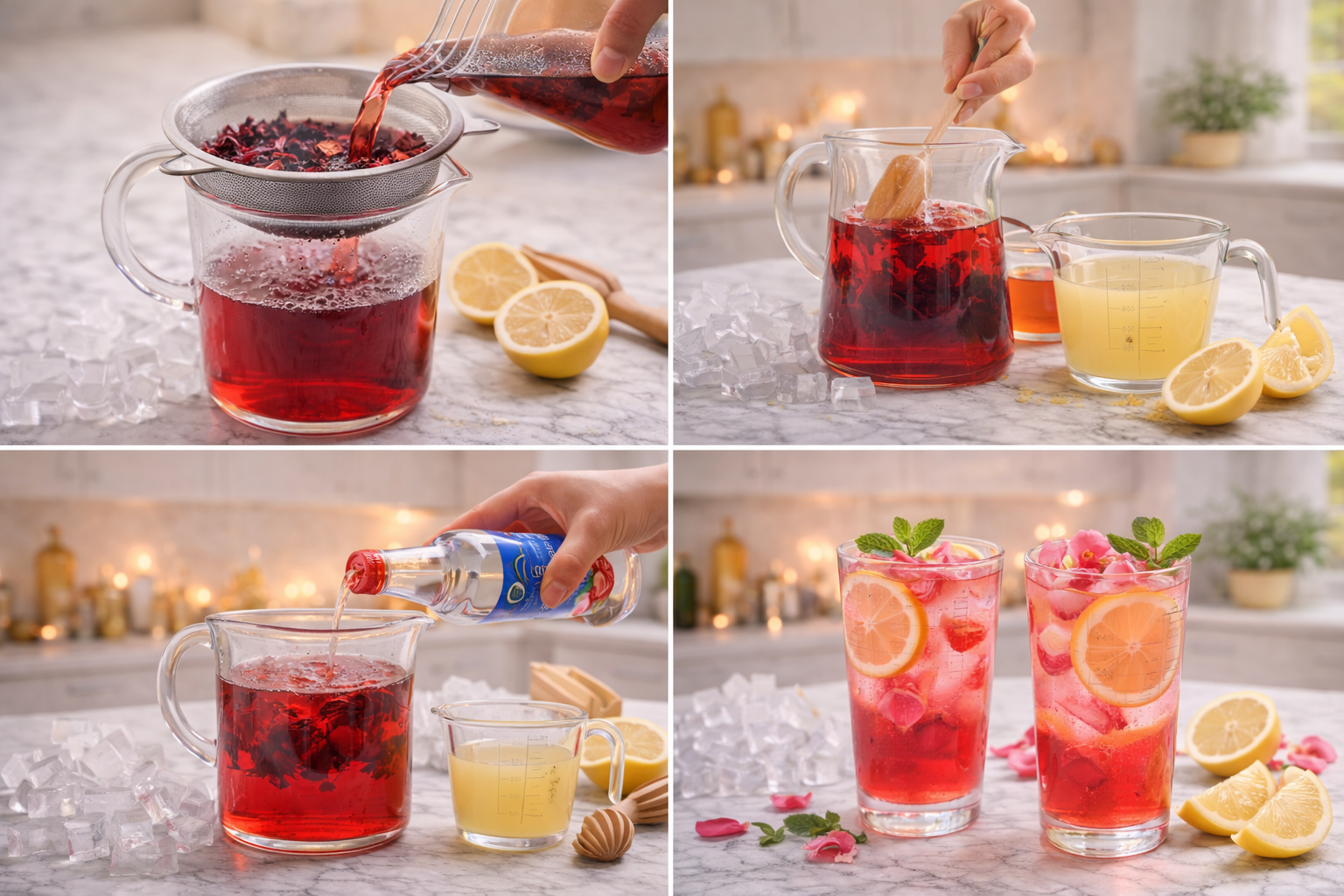
- Brew the hibiscus. Pour freshly boiled water over the dried hibiscus in a heatproof container. Steep for 10–15 minutes, or follow the package directions, then strain.
- Add sweetener if using. Stir it into the warm tea so it dissolves easily.
- Cool and chill. Let the tea cool briefly, then refrigerate promptly.
- Add lemon. Start with ¼ cup lemon juice. Taste before adding more.
- Add rose water gradually. Stir in a few drops, taste and adjust. Stop when the aroma is pleasant; too much can overwhelm the drink.
- Dilute to your liking. Add cold water, then serve over ice. For a sparkling version, add sparkling water just before serving.
Keep covered in the refrigerator and use within two days. Store without ice so it doesn’t become diluted.
Adjust the Flavor
- Too tart? Add more water before reaching for more sweetener.
- Too floral? Dilute with additional hibiscus tea and water.
- Too strong? Serve a smaller amount over ice and top with water.
- Prefer less sugar? Start unsweetened, then add a little only if needed.
Honey and maple syrup both count as added sugars. Choose whichever flavor you enjoy rather than treating one as a health upgrade.
Can I Cold-Brew It?
If your hibiscus product includes cold-brew directions, follow them and prepare it in a clean, covered container in the refrigerator. Otherwise, use the hot-brew method above and chill the tea.
What Does the Research Actually Say?
Research on an ingredient is not the same as research on this recipe. We aren’t presenting hibiscus rose lemonade as a clinically tested drink. Its strength, serving size and added ingredients differ from preparations used in studies.
Hibiscus and Blood Pressure
Some human trials have found reductions in blood pressure with regular hibiscus consumption. In one study, 65 adults with slightly elevated blood pressure drank three servings of hibiscus tea or a comparison drink each day for six weeks. Participants were not taking blood pressure medication. The hibiscus group had a greater reduction in systolic blood pressure—the top number in a reading. That finding does not tell us what one glass of this lemonade will do, or whether it is suitable alongside your medication. Do not stop or change prescribed treatment because you start drinking hibiscus.
Cholesterol and Blood Sugar
Research findings vary, and studies use different amounts and preparations. We would not recommend this lemonade as a way to manage cholesterol or diabetes.
Antioxidants and Skin Claims

Hibiscus contains plant compounds associated with its red color, while lemon contributes vitamin C. That doesn’t establish this recipe as a drink for clearer skin, younger-looking skin or disease prevention. The amount of vitamin C in a glass also depends on the recipe and serving size. Enjoying varied foods can help you meet your nutritional needs. One drink cannot promise a visible “glow.”
Rose Water and Relaxation
Here, rose water is a flavoring. Research involving rose scent, extracts or other preparations should not be used to claim that a small amount of culinary rose water in lemonade treats anxiety or improves sleep. You may enjoy the aroma and the pause that comes with making a drink. That personal experience is enough without calling it a treatment.
Hydration
This lemonade contributes fluid, just as other drinks do. If you enjoy the flavor, it may add variety to your day. Keep plain water available too, particularly when serving a sweetened pitcher at a gathering.
Two More Ways to Enjoy the Flavors
Bonus Recipes
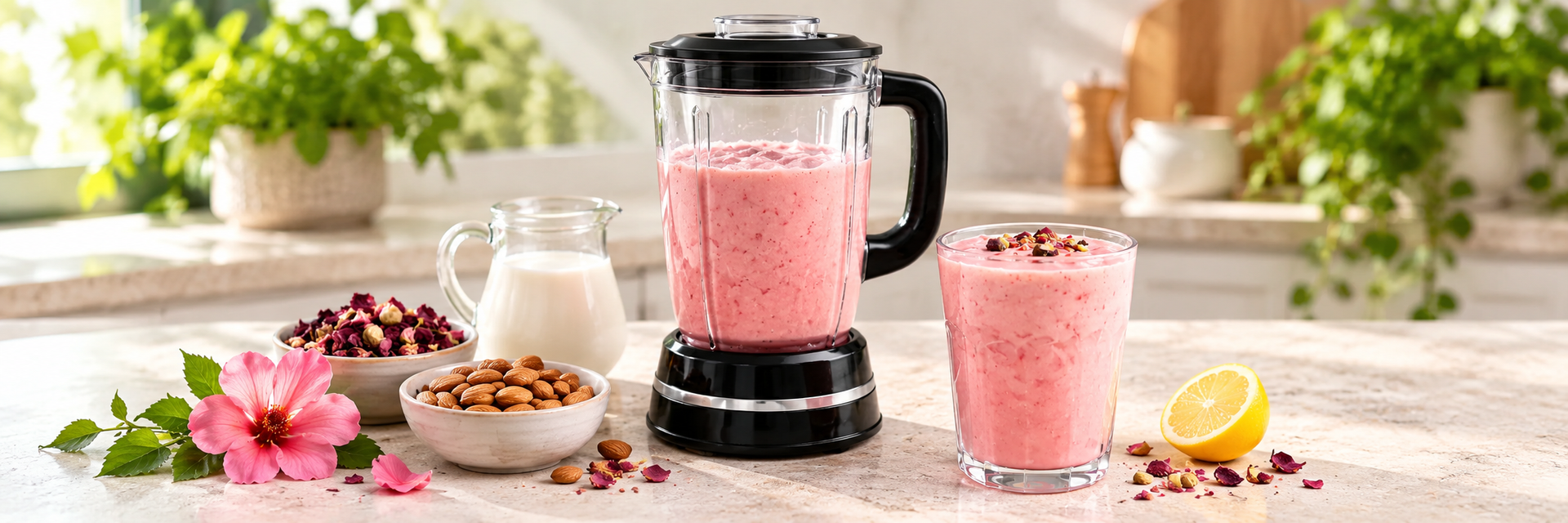
1. Creamy Almond Hibiscus Rose Drink

For a different texture, try a small batch with almond milk.
Ingredients
- 1½ cups chilled hibiscus rose lemonade
- ½ cup unsweetened almond milk
Method
- Stir or shake the almond milk.
- Add it slowly to the cold lemonade.
- Stir and serve immediately.
The lemon’s acidity may cause the almond milk to separate a little. Test a small glass first and give it a stir.
For a less acidic version: Use chilled hibiscus tea with a little culinary rose water and sweetener, leaving out the lemon.
Contains almond. Check all ingredient labels if allergies are a concern
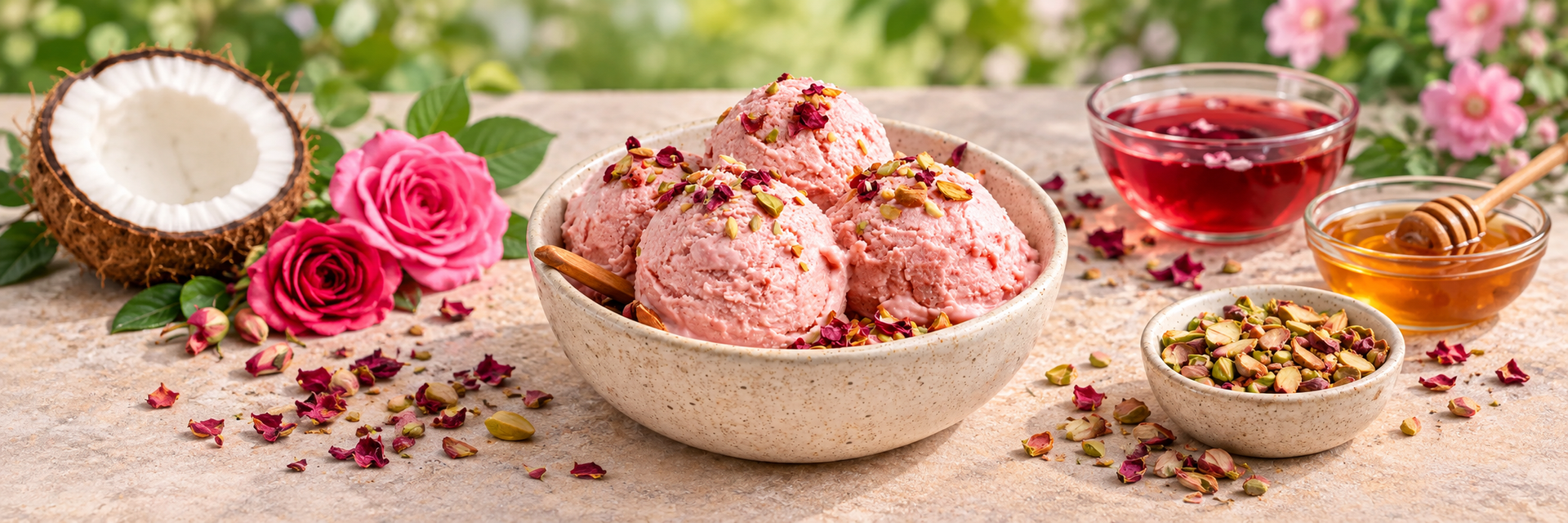
2. Frozen Hibiscus Rose Coconut Dessert with Pistachios

This makes a homemade frozen treat. Without churning, expect a firmer, icier texture than shop-bought ice cream.
Ingredients
- 1 cup full-fat canned coconut milk, stirred until smooth
- 1 cup strong hibiscus tea, cooled
- 2–3 tablespoons honey or maple syrup, to taste
- A few drops of culinary rose water, adjusted to taste
- Optional: ¼ cup chopped pistachios, for serving
To prepare the tea: Steep 2 tablespoons food-grade dried hibiscus in 1 cup freshly boiled water for about 10–15 minutes, or follow the package instructions. Strain, cool and refrigerate.
Method
- Blend the coconut milk, chilled tea and sweetener.
- Add rose water a few drops at a time, tasting before adding more.
- Pour into a shallow freezer-safe container.
- Freeze until firm, stirring every 30–60 minutes during the first few hours if practical.
- Let it soften briefly before scooping.
- Add pistachios just before serving.
Freezing time depends on your freezer and the depth of the container. For a churned version, follow your ice-cream maker’s directions.
Contains coconut and, if added, pistachios. Omit pistachios for anyone with a pistachio allergy and check labels for cross-contact.
Who Should Check Before Trying It?
Ask your healthcare provider or pharmacist about hibiscus before making it a regular drink if you:
- Take blood pressure or diabetes medication.
- Have low blood pressure.
- Take other medicines regularly.
- Are pregnant or breastfeeding.
- Have a health condition that affects your food or fluid choices.
Safety information during breastfeeding is limited. Herbal ingredients should not be assumed suitable for everyone simply because they are sold as tea.
A Note for Families
Do not give honey to babies younger than 12 months, including in drinks or frozen desserts, because of the risk of infant botulism. Replacing honey with maple syrup does not make this lemonade an appropriate drink for a baby. For young children, ask their pediatrician about unfamiliar herbal drinks. This article does not establish a suitable hibiscus serving amount for children.
Ingredient Checks
- Use food-grade hibiscus, rose water and rose petals.
- Check tea blends for additional herbs and caffeine.
- Check almond milk and pistachios for relevant allergens.
- Keep prepared drinks chilled and refrigerate leftovers promptly.
A 1GlowWithin Tip
Make the first batch lightly flavored. You can always add more lemon, rose water or sweetness, but it’s harder to take them back out.
A refreshing drink doesn’t need to improve your skin or fix your sleep to deserve a place at the table. Enjoy the flavor, share it if you like and make it in a way that suits you.
For more recipes and a fuller explanation of the research, explore our Hibiscus Tea: Recipes, Research & Safety guide.
Sources and Further Reading
- McKay and colleagues: Hibiscus tea and blood pressure, 2010 clinical trial
- Systematic review of hibiscus, blood pressure and cardiometabolic markers
- National Library of Medicine: Hibiscus—Drugs and Lactation Database
- University of Florida IFAS: Roselle
- NIH Office of Dietary Supplements: Vitamin C
- CDC: Foods and Drinks to Avoid or Limit for Infants and Toddlers