





Share this article

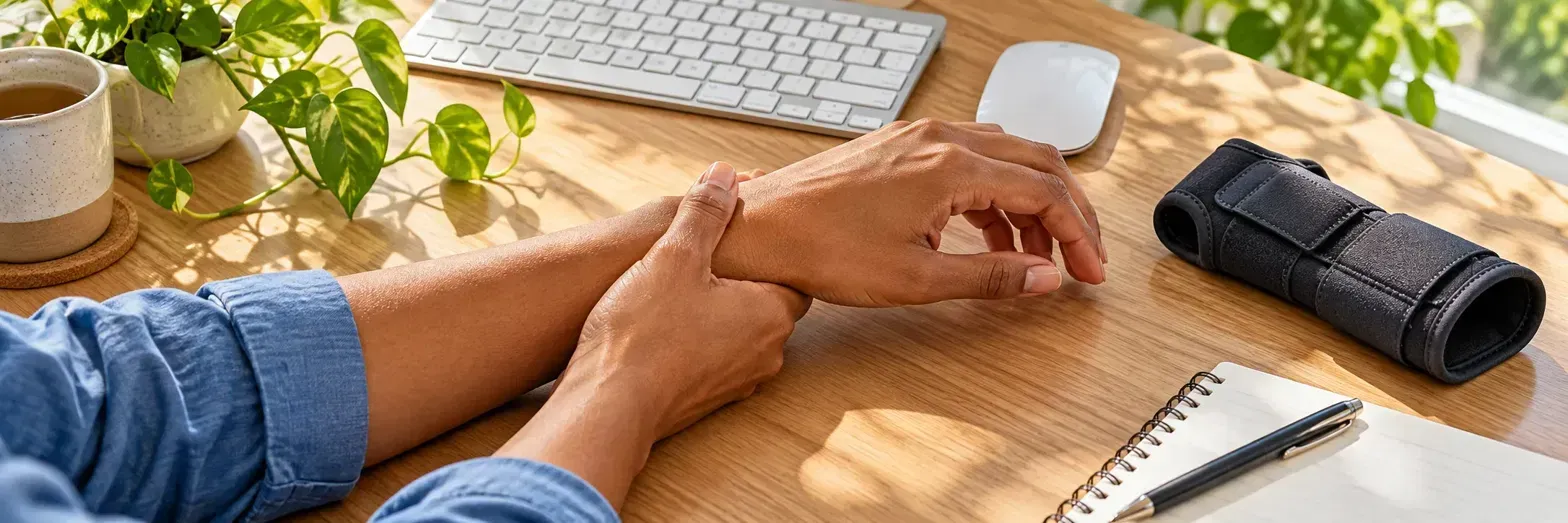
Person holding an aching wrist at a desk beside a keyboard and wrist splint

Carpal Tunnel Syndrome: Gentle Exercises, Symptoms and Everyday Relief


By the 1GlowWithin Team · Updated October 2026


Tingling fingers, an aching wrist or numbness that wakes you at night can make everyday moments harder—whether you’re typing, cooking, driving or holding your phone.


Carpal tunnel syndrome is one possible cause. Understanding what’s happening can help you choose useful changes and recognize when your hands need professional attention.


Think of hand care as a combination of comfortable movement, practical adjustments and the right support for your symptoms.


What Is Carpal Tunnel Syndrome?

Carpal tunnel syndrome, or CTS, happens when the median nerve is compressed at the wrist. This nerve passes through a narrow passage called the carpal tunnel, alongside tendons that bend your fingers. Increased pressure in that space can affect sensation and hand function.


The median nerve supplies feeling to your thumb, index finger, middle finger and the thumb-side half of your ring finger. It also helps control muscles at the base of your thumb.


Common Symptoms

Symptoms often come and go at first. They may become more noticeable at night or when your wrist stays bent for a long time.


You might notice:

  • Tingling or pins and needles in the affected fingers.
  • Numbness that interrupts your sleep.
  • Aching in your hand, wrist or forearm.
  • A weaker thumb or difficulty gripping.
  • Dropping objects or finding buttons and other small tasks harder.


The little finger is usually spared. Symptoms affecting other areas may have another cause, so persistent discomfort deserves an assessment.


What Causes Carpal Tunnel Syndrome?

Using a vibrating sander, family hands, pregnancy and a wrist exam as CTS risk factors

CTS often develops from a combination of factors. It is not simply a sign that your hands are weak.


Repeated Hand Use and Wrist Position

Forceful gripping, vibrating tools and activities involving prolonged or repeated wrist bending can contribute to symptoms.

Notice which tasks bother your hands. That information can help a clinician recommend adjustments that fit your daily life.


Anatomy and Family History

Some people naturally have less space within the carpal tunnel. Anatomical differences can run in families.


Pregnancy

Pregnancy-related swelling can increase pressure on the median nerve. Symptoms sometimes improve after pregnancy, but persistent numbness or weakness still needs attention.


Health Conditions

Diabetes, rheumatoid arthritis and thyroid disorders are associated with CTS. A previous wrist injury may also increase the risk.


Having a risk factor does not mean you will develop the condition.


When to Get Your Hands Checked

Doctor gently examining a man's wrist and hand beside a wrist splint

Arrange an appointment if symptoms keep returning, disturb your sleep, worsen or do not improve with appropriate self-care.


Seek prompt assessment if numbness becomes constant, your thumb or grip becomes weaker, you repeatedly drop objects, or the muscle at the base of your thumb appears smaller.


These changes deserve attention rather than a more demanding exercise routine.

A healthcare professional can examine your hand and consider other possible causes. Nerve tests or imaging may sometimes help clarify the diagnosis.


What Does the Research Say About Exercises?

  • Gentle exercises, including tendon glides and certain stretches, are sometimes included in carpal tunnel care. They may help some people maintain comfortable movement.
  • The evidence is limited and results vary. Some studies report improvements, while others find little additional benefit when exercises are added to treatments such as splinting.
  • The 2024 American Academy of Orthopaedic Surgeons guideline found that exercise has not demonstrated improved long-term patient-reported outcomes for CTS.
  • Exercises can therefore be an option within an individualized care plan, without being presented as a cure or a guaranteed way to prevent surgery.


The useful question is whether a movement suits your symptoms and helps you function comfortably.


Before You Begin

Ask a doctor, physical therapist or occupational therapist which exercises are appropriate for you, particularly if your diagnosis is uncertain.

  • Move slowly and stay within a comfortable range.
  • Avoid forceful pulling or squeezing.
  • Stop if pain, tingling or numbness increases.
  • If symptoms remain worse afterward, seek advice before repeating the movement.
  • After surgery, follow your surgical team’s rehabilitation instructions.

For stretches, aim for a mild forearm pull. Tendon and nerve glides should remain gentle, controlled movements.


Gentle Hand and Wrist Exercises

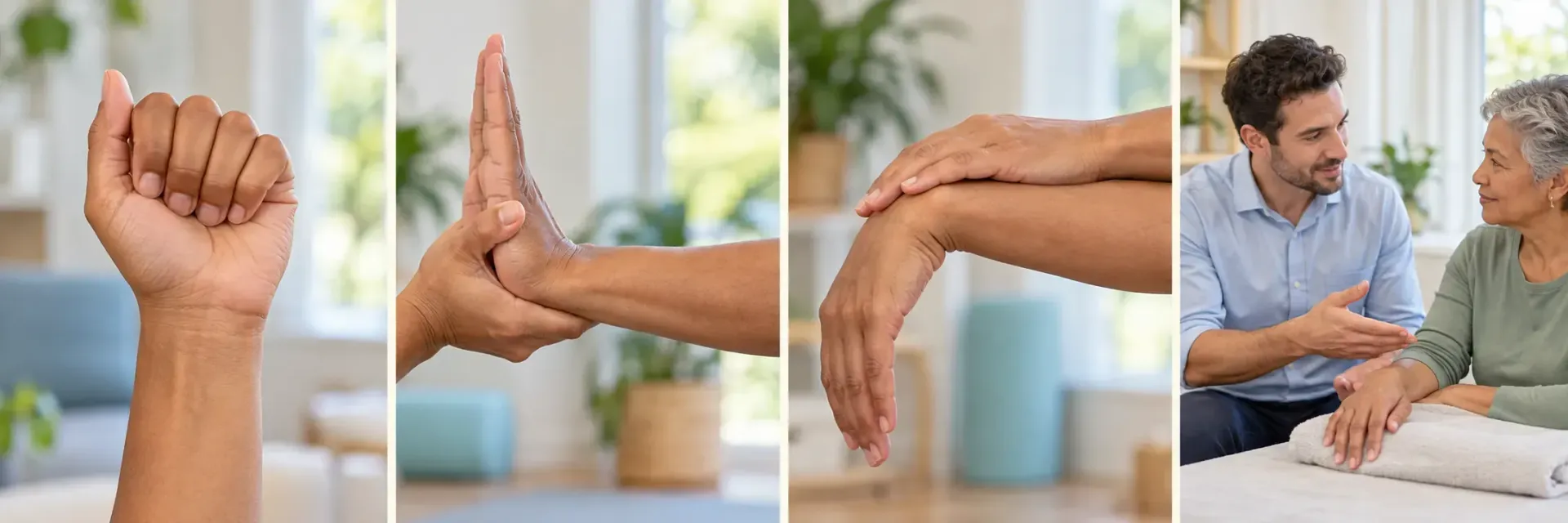
Gentle fist, wrist extension and flexion stretches, and a therapist guiding hand exercises

The movements below describe commonly used exercises to discuss with your clinician. Follow the holds, repetitions and frequency recommended for you.

You do not need to complete every exercise.


1. Tendon Glides

Tendon glides move the fingers through different positions while keeping the wrist straight.

  1. Straight hand: Hold your fingers comfortably straight and together.
  2. Hook: Bend the middle and end finger joints while keeping the large knuckles straight.
  3. Gentle fist: Curl your fingers toward your palm, keeping your thumb outside.
  4. Return to the straight-hand position.

Move smoothly without squeezing tightly or forcing your fingertips farther into your palm.


The AAOS exercise handout illustrates tendon-gliding sequences that you can review with your therapist.


2. Wrist Extension Stretch

This stretches the palm-side forearm.

  1. Extend your arm in front of you without locking your elbow.
  2. Face your palm forward, with your fingers pointing upward.
  3. Use your opposite hand to apply gentle pressure across your palm.
  4. Stop at a mild forearm stretch, then release slowly.

Avoid pulling individual fingers forcefully. Skip the stretch if it brings on pins and needles.


3. Wrist Flexion Stretch

This stretches the back of the forearm.

  1. Extend your arm without locking your elbow, with your palm facing down.
  2. Gently bend your wrist so your fingers point downward.
  3. Use your opposite hand to guide the hand toward your body.
  4. Keep the pull mild, then return slowly to a comfortable position.

Stop if the movement increases pain, numbness or tingling.


4. Median Nerve Glides

Median nerve glides involve a coordinated sequence of finger, thumb, wrist and forearm positions.


Have a qualified professional demonstrate the version intended for you. Small changes in positioning can affect how the movement feels. You can review the illustrated AAOS therapeutic exercise program with your clinician. It is designed to be used under professional supervision. Treat these movements as gentle glides, rather than an attempt to stretch the nerve strongly.


Finish With a Comfortable Pause

Lower your hands and relax your shoulders. Notice how your hands feel before returning to your activity. If symptoms have increased, pause the routine and ask for advice.


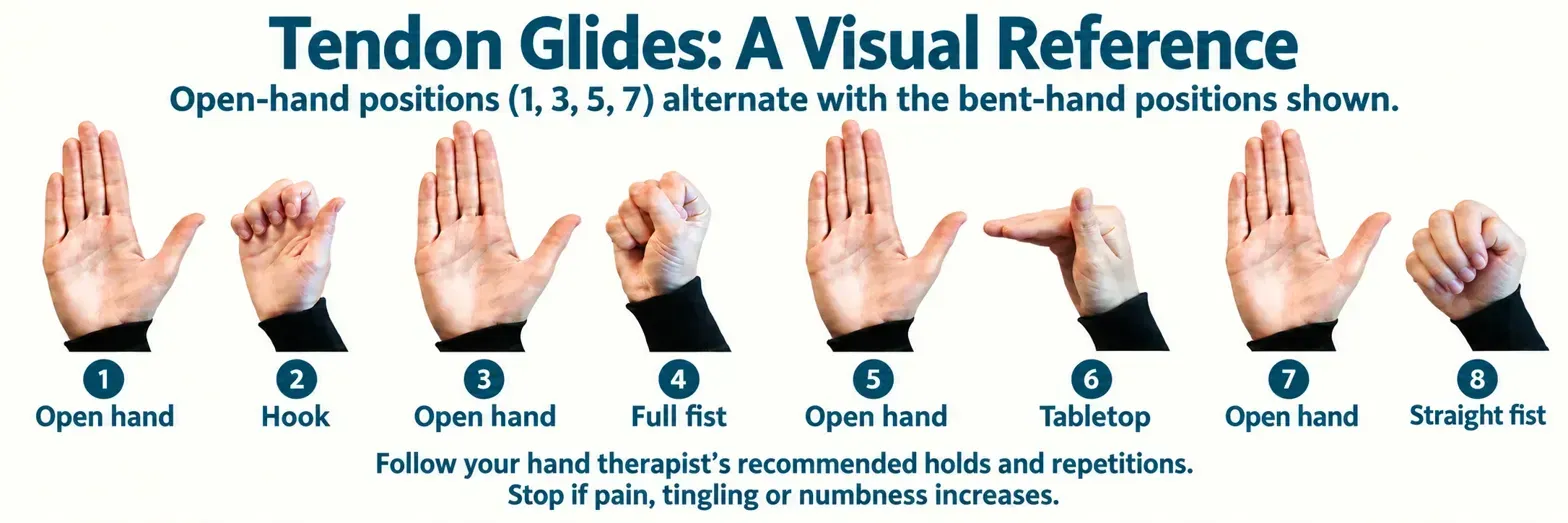
Tendon Glides: A Visual Reference

Tendon glides chart: open hand, hook, full fist, tabletop and straight fist positions

This image shows four finger positions, each paired with a return to an open hand. The numbers help you follow the pictures; they represent eight illustrated positions rather than eight separate exercises.


Review the sequence with your hand therapist. Keep your wrist straight, move gently and avoid tight squeezing. Follow the repetitions and frequency recommended for you, and stop if pain, tingling or numbness increases.


What About Grip Strengtheners and Squeeze Balls?

Therapist discussing grip tools, a night wrist splint, and typing with straight wrists

Strengthening can belong in rehabilitation, but resistance should match your symptoms and stage of recovery. If gripping triggers tingling or pain, a spring gripper, repeated ball squeezing or wrist weights may make the activity harder to tolerate.


Ask your therapist:

  • Is strengthening appropriate for me now?
  • Which movement and resistance should I use?
  • How many repetitions should I do?
  • What symptoms mean I should stop?
  • When should I increase or reduce the exercise?


Everyday Changes That May Help


Consider a Night Splint

A suitable wrist splint can help keep your wrist straight while you sleep. This is a common option for nighttime symptoms.

Ask a clinician or pharmacist about fit and use. The splint should support your wrist without excessive tightness or uncomfortable pressure.


Adjust Tasks That Aggravate Your Symptoms

Start with the activity that most often brings on discomfort.


You might:

  • Loosen your grip on tools, pens or your phone.
  • Keep your wrist comfortably aligned with your forearm.
  • Alternate tasks instead of repeating one movement for long periods.
  • Take brief breaks before discomfort builds.
  • Adjust your keyboard, mouse or work surface to reduce awkward wrist positions.
  • Reduce exposure to vibrating tools where possible.

Choose changes that make your actual day easier. There is no need to replace everything at once.


What If Symptoms Continue?

Doctor explaining wrist anatomy to a patient, and a woman tracking her hand symptoms

You do not have to keep stretching and hoping. Depending on your symptoms and examination, a clinician may discuss splinting, activity changes, an injection or surgery.


Steroid Injections

An injection may reduce symptoms, although relief can be temporary. Your clinician can explain the likely benefits and limitations.


Carpal Tunnel Release Surgery

Surgery creates more space for the median nerve by releasing the ligament forming the roof of the tunnel. It may be recommended when symptoms are severe, nerve damage is a concern or other treatments have not helped sufficiently. Your specialist can explain recovery, expected benefits and possible risks.


Track Changes That Matter

A short symptom note can help you prepare for an appointment.


Record:

  • Which fingers are affected.
  • When symptoms happen.
  • Whether they wake you at night.
  • Which tasks make them worse.
  • Whether numbness is becoming constant.
  • Any changes in strength or coordination.


Progress might mean fewer nighttime interruptions or more comfortable everyday tasks. A stronger grip alone does not tell the whole story.


Frequently Asked Questions

  • Can Exercises Cure Carpal Tunnel Syndrome?

    Exercises alone are not an established cure. Some people find them useful as part of a wider treatment plan.

  • Should I Continue If I Feel Tingling?

    Stop if tingling, numbness or pain increases. Review the movement with a clinician before trying it again.

  • How Often Should I Do the Exercises?

    Follow the schedule recommended for you. The appropriate amount depends on the movement, your symptoms and your stage of recovery.

  • Can I Do These Exercises After Surgery?

    Follow your surgical team’s instructions rather than a general online routine. Your rehabilitation plan should match your healing stage.

  • Is Every Tingling Hand Carpal Tunnel Syndrome?

    No. Other nerve problems and health conditions can cause similar symptoms. An assessment helps identify the cause and suitable treatment.


The 1GlowWithin View

Your hands help you work, create, cook and care for the people you love. Caring for them can begin with one useful change: a lighter grip, a more comfortable setup or an appointment you have been putting off.


Move gently when it suits your care plan, notice your response and reach out for support when you need it.


Explore more practical self-care ideas in 1GlowWithin Glow Tips.


Sources and Further Reading


This article provides general information and does not replace individualized advice from a qualified healthcare professional.

Recent Posts

Adults over 60 doing gentle exercises at home: chair stand, wall push-up, heel raises, side leg rais
By 1GlowWithin • November 4, 2026
Five gentle exercises for adults over 60 to support leg strength, balance and everyday mobility — plus a free 4-Week Gentle Strength Plan to help you stick with it.

Coping Skills for Stress and Anxiety
By 1GlowWithin • September 23, 2026
Discover healthy coping skills for stress and anxiety, emotional intelligence tips, 5 wellness drink recipes and practical tools for calmer routines.

matcha lattes
By 1GlowWithin • September 23, 2026
fall matcha latte recipes—apple-cinnamon, pumpkin spice and vanilla chai—with exact measurements, lower-sugar options and easy homemade tips.

Two friends enjoying a peaceful fall moment surrounded by vibrant autumn leaves and warmth
By 1GlowWithin • September 1, 2026
Discover 10 simple fall wellness ideas to feel grounded, energized and supported through seasonal changes without pressure, perfection or expensive routines.

Multi-generational family enjoying a summer beach vacation together outdoors.
By 1GlowWithin • June 17, 2026
Family vacations can create lasting memories and they can also bring stress, planning challenges, family dynamics, and budget concerns.

Person gazing out a window beside a mug, notebook, and potted plant in warm morning light
By 1GlowWithin • May 3, 2026
A compassionate guide to the emotional, financial and family challenges of a midlife cancer diagnosis, plus gentle self-care to use alongside medical treatment.

Two people sitting apart on a couch in a softly lit living room, looking away from each other
By 1GlowWithin • April 8, 2026
Discover why intimacy fades in relationships due to stress, life changes, and emotional burnout—and how to rebuild connection with practical, realistic steps.
Family sitting on a flowered blanket in a sunny garden near a waterfall, smiling and sharing a picnic
By 1GlowWithin • April 3, 2026
Feeling exhausted even after resting? This gentle spring reset helps you rebuild energy, calm your nervous system, and restore your natural glow—no extremes needed.

Assorted fresh fruits, vegetables, grains, fish, and spices arranged on a kitchen counter
By 1GlowWithin • March 20, 2026
A simple head-to-toe superfood checklist for spring: what to eat for energy, digestion, skin, hair and heart, plus two easy recipes. No detox, just real food.

Shrimp fried rice in a black skillet, garnished with herbs, with lime wedges and small bowls of ingredients nearby
By 1GlowWithin • March 8, 2026
Learn how to make healthy shrimp fried rice that’s better than takeout. This quick high-protein recipe is packed with vegetables, flavor, and easy steps.
Show More