

Barbadine: A Tropical Fruit Worth Knowing
By the 1GlowWithin Team · Updated October 2026
If you grew up in the Caribbean, barbadine may bring back memories of a cold, creamy punch poured at home or a scoop of barbadine ice cream on a hot afternoon.
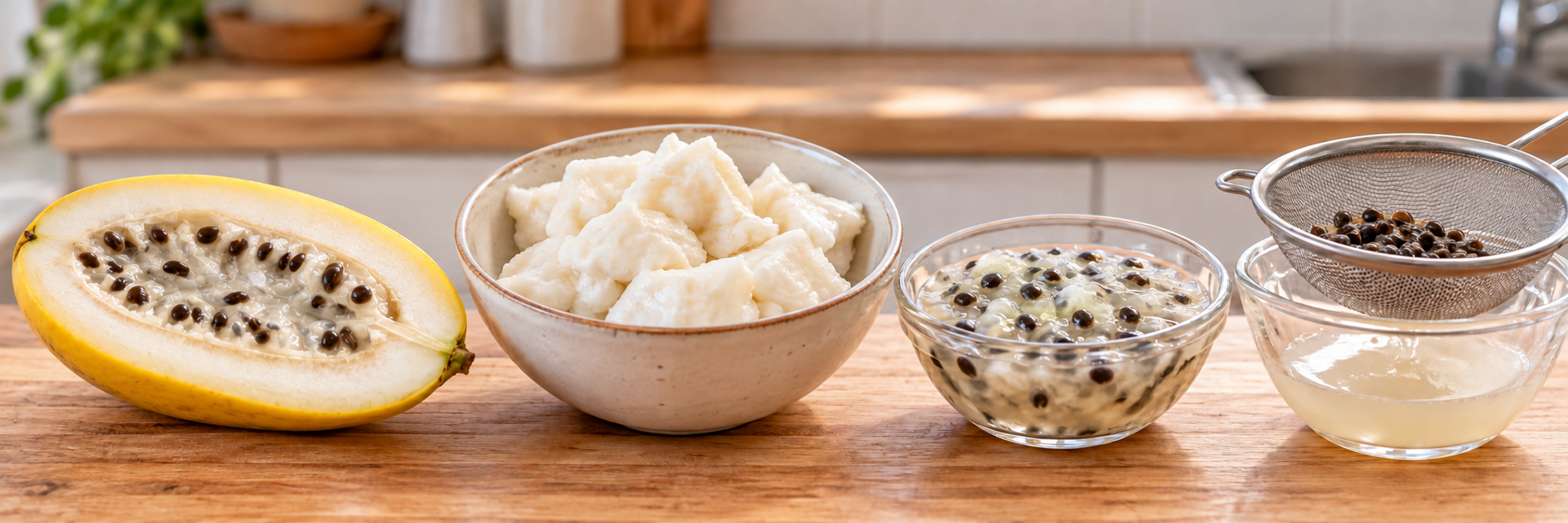
If it’s new to you, you might walk past it at a market without knowing what to do with it. It’s a large fruit, and cutting one open reveals two different ingredients: thick, pale flesh and a center filled with fragrant, seed-covered pulp.
You can use both.
At 1GlowWithin, we want to make everyday food choices easier to understand. Here’s how to choose barbadine, prepare it and enjoy it—with a clear distinction between food traditions and health claims.
This article shares general food and recipe information. It is not medical advice.
What Is Barbadine?
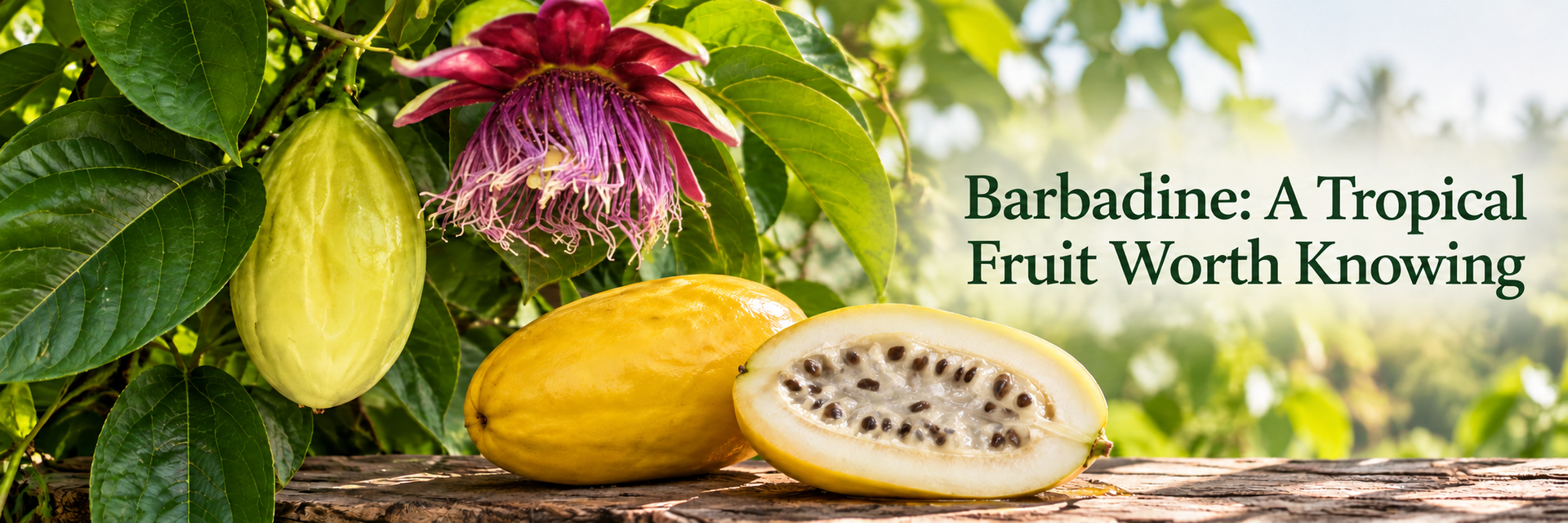
Barbadine, also called giant granadilla (Passiflora quadrangularis), is a tropical relative of the smaller passionfruit.
It grows on a climbing vine and produces a large, oblong fruit that can resemble a small melon. Beneath its greenish-to-pale-yellow skin is a thick layer of white or pinkish flesh. In the middle, seeds sit inside juicy, sweet-tart pulp.
The flesh has a mild flavor. The seed pulp contributes more of the familiar passionfruit aroma and tang. That difference is useful when you’re deciding how to prepare it.
Which Parts Can You Eat?

For the drinks and desserts in this guide, use:
- The flesh of the ripe fruit, after removing the skin.
- The juicy pulp surrounding the seeds.
- The seeds, if you enjoy their texture; otherwise, strain them out.
These are recognized food uses of barbadine.
This guide focuses on ripe fruit. Although unripe barbadine is cooked as a vegetable in some cuisines, it isn’t a direct substitute in the recipes below.
What about the leaves, roots and flowers? Keep those out of these recipes. Preparing a homemade tea or remedy from other parts of the plant is a different use, and should not be assumed safe because the fruit is edible.
If you grow barbadine at home, confirm the plant’s identity and use fruit grown with products suitable for edible crops.
What About Its Nutrition?

Barbadine can add variety to your fruit choices, but we don’t need to call it a “nutritional powerhouse” to make it worth trying.
Published information about its nutrients is less familiar and less standardized than the information available for common supermarket fruits. The flesh and seed pulp also differ, so a nutrition figure for one part may not describe the whole fruit—or your finished drink.
For transparency, we aren’t assigning precise vitamin, mineral or fiber amounts to these homemade recipes.
What you add matters too. A smoothie made with milk, condensed milk and fruit has a different nutritional profile from fruit blended with water. Straining changes the texture and removes some of the fruit solids.
What About the Health Claims?
You may see barbadine promoted for sleep, skin glow, blood pressure or “detoxing.” We are not presenting those as established benefits of eating the fruit.
Traditional use and laboratory research can be interesting, but they do not establish that a serving of barbadine will treat a condition or produce a particular result.
You can enjoy a familiar Caribbean food, or discover a new one, without using it as a remedy.
How to Choose and Prepare Barbadine
If you’re buying it for the first time, ask the seller to help you choose a ripe fruit. Color can vary, so don’t rely on yellow skin alone.
At the Market
Look for a sound fruit without mold, leaking areas or major damage. Ask whether it is ready to use or needs more time to ripen.
Tell the seller you plan to make a drink or dessert with the ripe fruit.
At Home

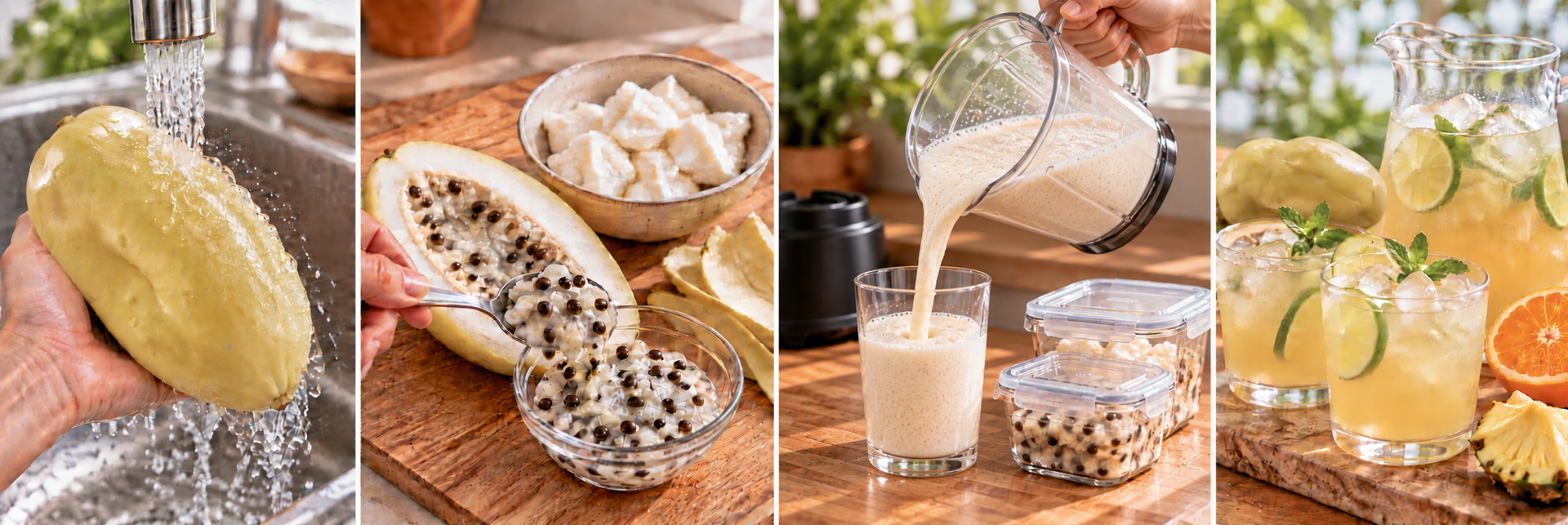
- Wash the outside under running water before cutting.
- Cut it lengthwise on a clean cutting board.
- Scoop the seed pulp into a bowl.
- Remove the outer skin and any tough membrane.
- Cut the edible flesh into pieces.
- Keep the flesh and seed pulp separate at first, so you can taste each and adjust your recipe.
Keeping the two parts separate also helps you make use of the whole fruit. You may want more pulp for a tangy drink and more flesh for a mild, creamy blend.
Storing It
Cover and refrigerate cut fruit promptly. Use it within a couple of days for freshness, or freeze portions for future drinks.
Cut fruit and milk-based drinks should not sit out for more than two hours—or one hour when temperatures exceed 90°F/32°C. Keep a serving pitcher chilled, especially at outdoor gatherings.
Barbadine Recipes to Try
These are starting recipes. Barbadine varies in flavor and texture, so taste before adding more liquid or sweetener.
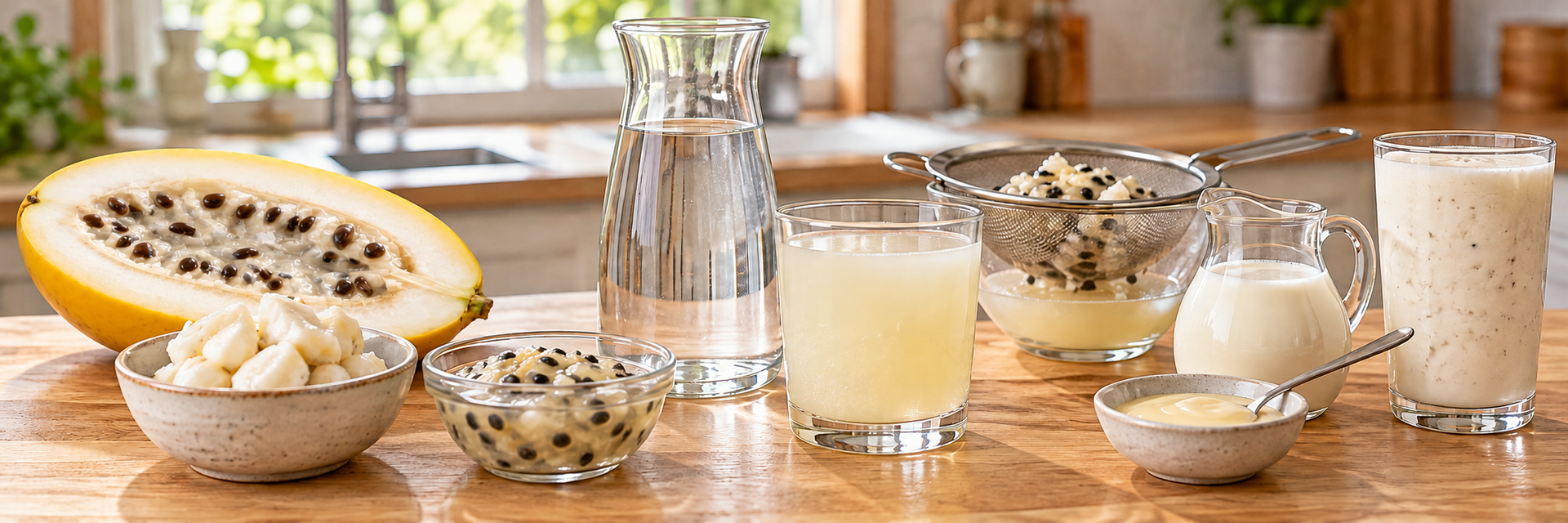
1. Creamy Barbadine Smoothie
This version takes its inspiration from the creamy barbadine drinks familiar to many Caribbean households.
Ingredients
- 1 cup prepared ripe barbadine flesh and seed pulp
- 1 cup milk or an unsweetened plant-based alternative
- 1–2 tablespoons condensed milk, optional
- A pinch of nutmeg
- A dash of cinnamon
- A few drops of vanilla
Method
- For a smooth drink, press the seed pulp through a sieve to separate the seeds.
- Blend the pulp, flesh, milk, spices and vanilla.
- Taste before adding condensed milk.
- Add a little more milk if the drink is too thick.
- Serve chilled.
Make it your way: Start without added sweetener. If you want some, add a small amount and taste again.
Condensed milk adds sweetness and richness. Honey and agave also add sugar, so switching sweeteners does not automatically make the drink lower in sugar.
If you choose a plant-based drink, check the label if protein or calcium matters to your meal—different products provide different amounts.
2. Barbadine Tropical Punch
A fruity option to share at brunch or a family gathering.
Ingredients
- 2 cups prepared ripe barbadine pulp and flesh, with seeds strained out
- 1 cup pineapple juice
- 1 cup coconut water
- ½ cup orange juice
- 1 tablespoon lime juice
- Optional: a little honey or agave
- Mint leaves, lime slices and ice
Method
- Blend the barbadine, pineapple juice, coconut water and orange juice.
- Add the lime juice and taste.
- Add more water if you prefer a lighter drink.
- Sweeten only if needed.
- Serve over ice with mint and lime.
The juices already contribute sweetness, so you may not need honey or agave.
For a less sweet version, replace some of the juice with plain water. Serve it in smaller glasses alongside food, and keep the remaining punch refrigerated.
Optional flavor change: Try a small amount of fresh ginger. Add a little at a time so it doesn’t overpower the fruit.
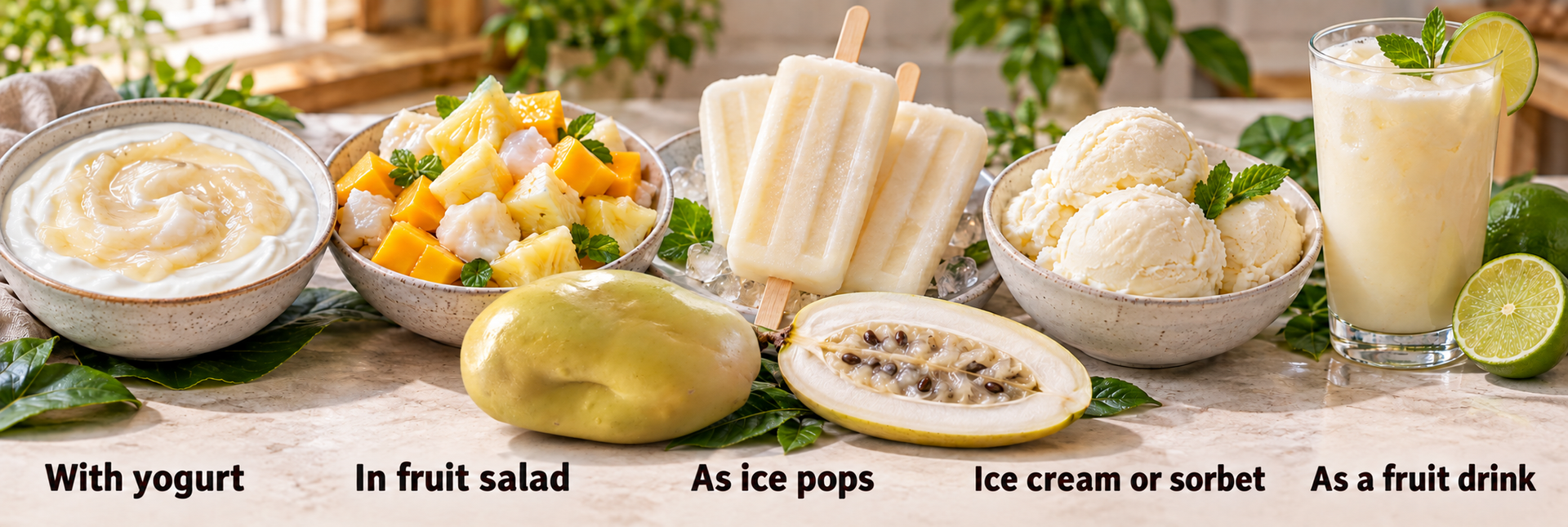
3. More Ways to Enjoy Barbadine

You don’t have to make a large pitcher to use it.
- With yogurt: Stir a spoonful of seed-free pulp into plain yogurt.
- In fruit salad: Add prepared ripe flesh to pineapple, mango or other fruit you enjoy.
- As ice pops: Freeze a prepared fruit blend in ice-pop molds.
- In ice cream or sorbet: Follow a recipe designed for the texture you want.
- As a simple fruit drink: Blend the prepared pulp with water, then adjust with lime to taste.
Barbadine has documented uses in fruit salads, beverages, ice creams and preserves.
If you have more than you need, freeze the prepared flesh and seed-free pulp in small portions. That makes it easier to use a little at a time.
Where to Find Barbadine
Try Caribbean, Latin American or specialty tropical fruit markets. Ask for barbadine or giant granadilla, and check availability before making a special trip.
If you can’t find it, another passionfruit pulp can work as a recipe variation. It will not taste exactly the same: smaller passionfruit varieties may be sharper, and frozen pulp may already contain sugar.
Check the label and adjust the recipe rather than adding the full amount of sweetener straight away.
Common Questions
Is Barbadine the Same as Passionfruit?
They are related, but they are different fruits. Barbadine is much larger and has a thick layer of edible flesh as well as the seed pulp in its center.
Can I Eat the Seeds?
Yes, the seeds are edible. You can leave them in if you enjoy the texture, or strain them out for a smoother drink.
To separate them, press the pulp through a sieve rather than blending the seeds finely.
Why Does the Flesh Taste So Mild?
The thick flesh has a milder flavor than the juicy seed pulp. Using a little of both helps you adjust the drink’s flavor and texture.
Can I Make Tea from the Leaves or Flowers?
We do not recommend a homemade medicinal tea from this guide. The edible fruit and other parts of the plant should not be treated as interchangeable.
Does Barbadine Help You Sleep?
We are not recommending barbadine as a sleep aid. Traditional claims about calming effects are not enough to establish that eating the fruit or drinking a smoothie treats sleep problems.
What If I’m Pregnant or Breastfeeding?
This article does not establish barbadine’s safety specifically during pregnancy or breastfeeding. Ask your healthcare provider if you’re unsure about including an unfamiliar food in your diet.
Avoid using the plant’s leaves, roots, flowers or extracts as homemade remedies.

A 1GlowWithin Tip
- If barbadine is new to you, start by tasting a small amount of the ripe flesh and pulp before making a recipe.
- You’ll get to know its flavor, waste less and have a better idea of how much sweetness you actually want.
- And if it’s a fruit you grew up with, sharing it can be a way to pass on a food memory. A familiar recipe, a story about who used to make it and a glass shared at the table can be enough.
Keep Exploring
- Hibiscus Tea: A Delicious Drink You Can Enjoy Hot or Cold
- Explore More Glow Tips
- Try Our Free GlowTools
Sources and Further Reading
- Singapore National Parks Board: Passiflora quadrangularis
- Food and Agriculture Organization: Passiflora quadrangularis crop information
- U.S. Food and Drug Administration: Selecting and Serving Produce Safely
- U.S. Food and Drug Administration: Are You Storing Food Safely?
1GlowWithin is a wellness content website. This article provides general education and recipe ideas. It does not diagnose, treat or replace individual medical advice.