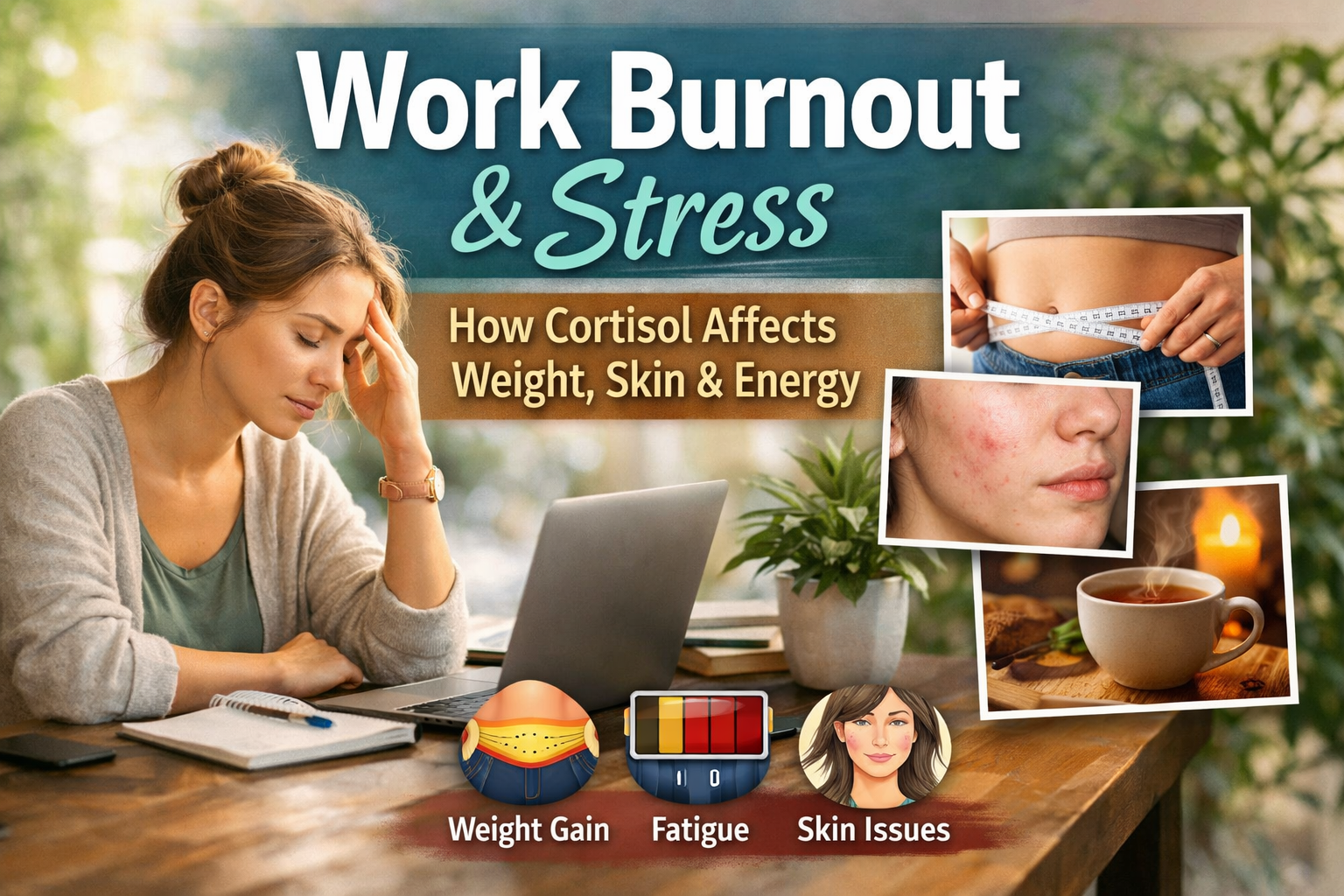



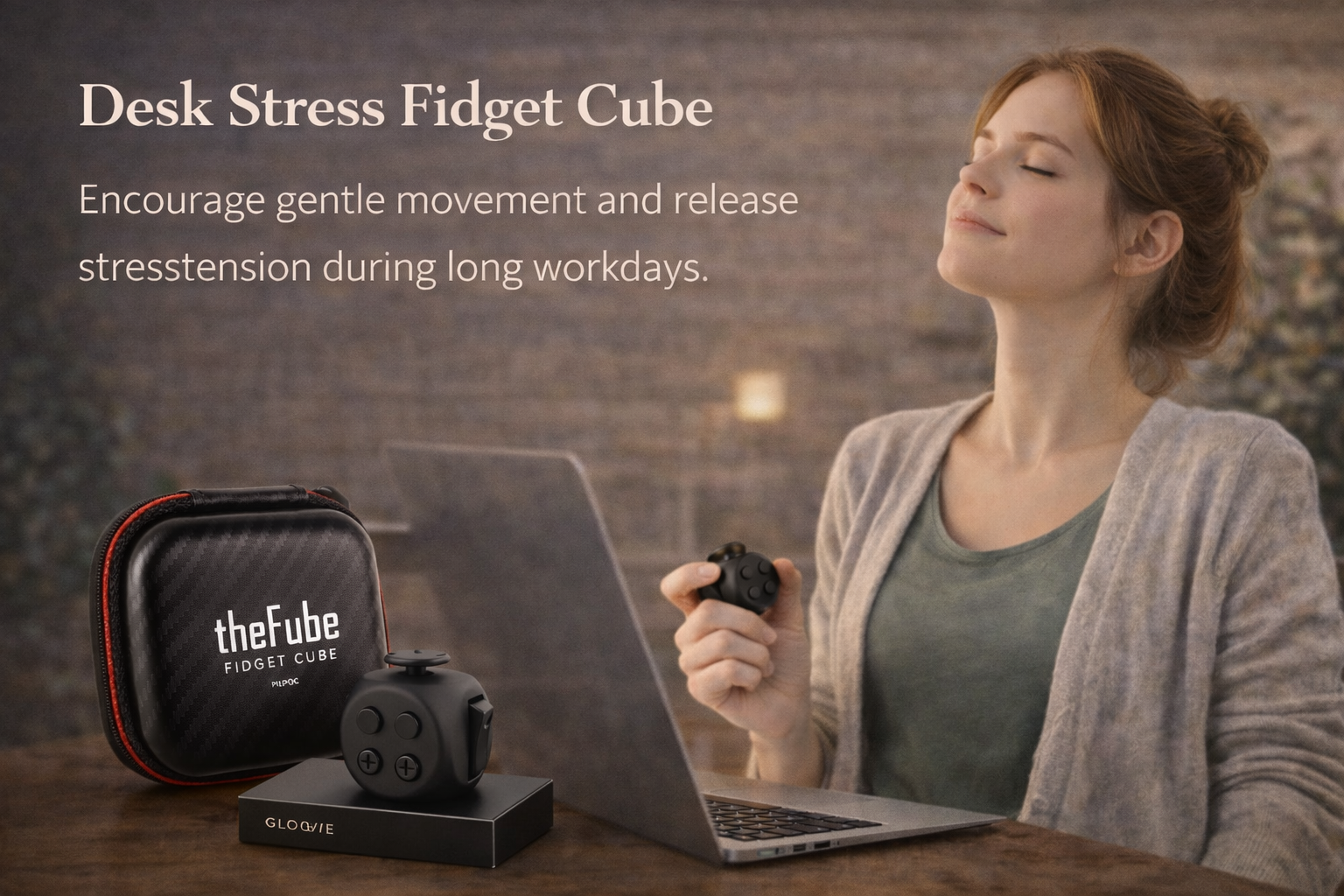



What Work Burnout Really Is? Work burnout is not laziness or lack of discipline. It is a physiological stress response that develops when your nervous system stays activated for too long. When work stress becomes chronic, the body shifts into survival mode. In this state, recovery, repair, and energy regulation are deprioritized. You may still be trying—sometimes harder than ever but your system no longer has the capacity to respond. Burnout is not a mindset failure. It is a regulation issue.
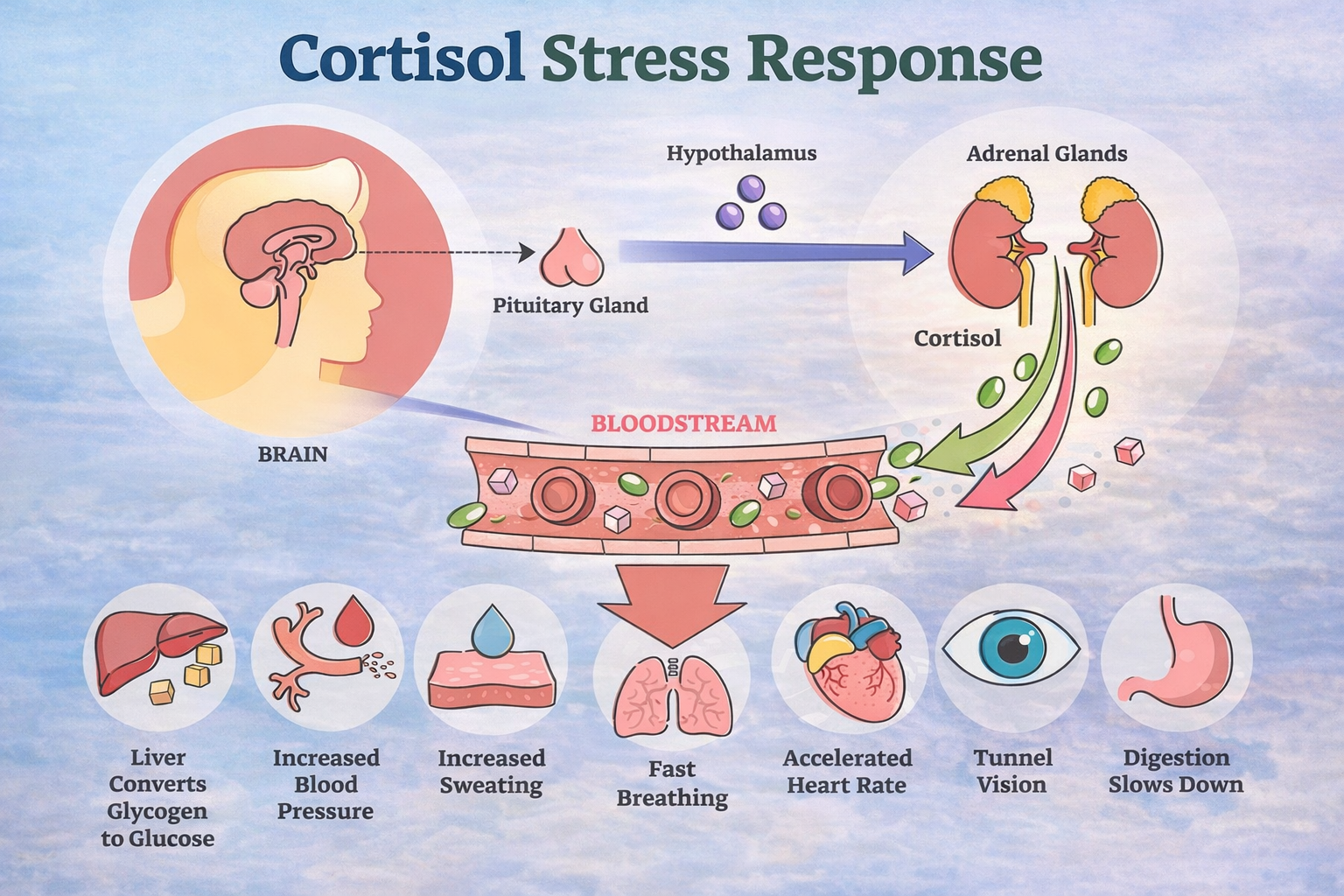
How Stress Affects the Nervous System: Stress triggers the release of cortisol, a hormone designed to help you manage short-term challenges. This is helpful in brief moments but damaging when stress never shuts off.
When cortisol stays elevated:
- Sleep becomes lighter and less restorative
- Metabolism becomes less efficient
- Skin repair slows
- Energy production becomes inconsistent
The result is a body that feels tired but wired, overstimulated yet depleted.

Stress Weight Gain Explained: Chronic stress encourages the body to store energy, not release it.
Elevated cortisol:
- Signals the body to preserve fat
- Increases fat storage around the midsection
- Triggers cravings for quick energy foods
- Slows metabolic efficiency
This is not about willpower. It is a biological response designed to protect you during perceived long-term threat.
Cortisol and Fatigue: Burnout fatigue feels different from normal tiredness.
Common signs include:
- Energy crashes despite adequate sleep
- Brain fog and reduced focus
- A constant wired-but-exhausted feeling
This happens because cortisol interferes with deep sleep cycles and disrupts normal energy rhythms. Rest alone doesn’t fix it—nervous system regulation does.
How Burnout Impacts Skin Health: Stress hormones increase inflammation and reduce cellular repair.
Over time, this can show up as:
- Dull or uneven skin tone
- Increased breakouts or sensitivity
- Slower collagen production
- Skin that looks tired even with good skincare
Stress becomes visible on the skin when internal balance is off.

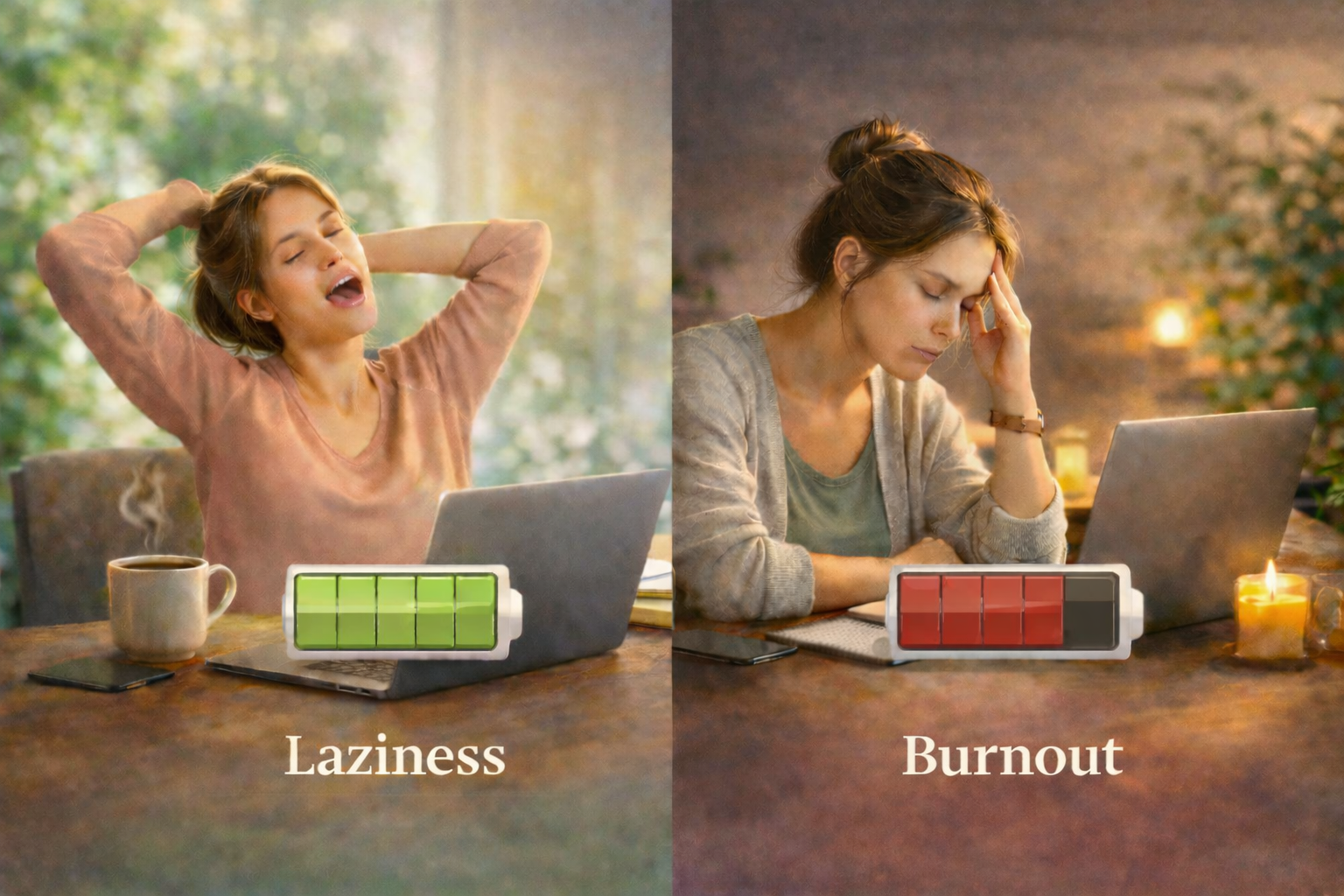
Burnout vs. Laziness:
- Laziness: Energy is available, effort is withheld.
- Burnout: Effort is present, capacity is depleted.
Burnout is your body signaling that pressure is no longer the solution. Regulation, rest, and recovery are.
Why Stress Changes the Body’s Priorities:
During chronic stress, the body prioritizes survival over optimization.
That means:
- Fat loss becomes secondary
- Skin repair slows
- High energy output is reduced
- Inflammation control takes priority
Your body isn’t working against you—it’s working to keep you safe.
Science-Backed Support for Work Burnout
Simple Daily Reset for Work Burnout:
Morning
- Gentle wake-up (no rushing)
- Protein-rich breakfast
- Light movement or stretching
Midday
- Short walk or sunlight break
- Balanced meals
- Intentional stress pauses
Evening
- Herbal tea
- Stretching, massage, or foam rolling
- Calming sleep routine
Small daily regulation compounds faster than extreme resets.
Recent Posts

By 1GlowWithin
•
December 12, 2025
If you’re looking for a fresh, vibrant, and nutrient-packed meal that comes together in minutes, this Mediterranean Chickpea Salad is your new go-to. It’s crunchy, colorful, protein-rich, and filled with the bright flavors of lemon, herbs, and fresh veggies. Whether you enjoy it as a light lunch, a side dish, or a meal-prep staple, this salad delivers everything you need: fiber, minerals, antioxidants, and healthy fats all with no cooking required! Why You’ll Love This Mediterranean Chickpea Salad High in plant-based protein from chickpeas. Great for digestion with fiber-rich vegetables. Bright, refreshing flavor thanks to lemon + garlic + parsley. Versatile enjoy it as a salad, wrap, or side. Perfect for meal prep (lasts 3–4 days in the fridge). Mediterranean eating is known for supporting heart health, reducing inflammation, and boosting longevity — and this salad fits right into that lifestyle.
1GlowWithin
1GlowWithin • January 8, 2026